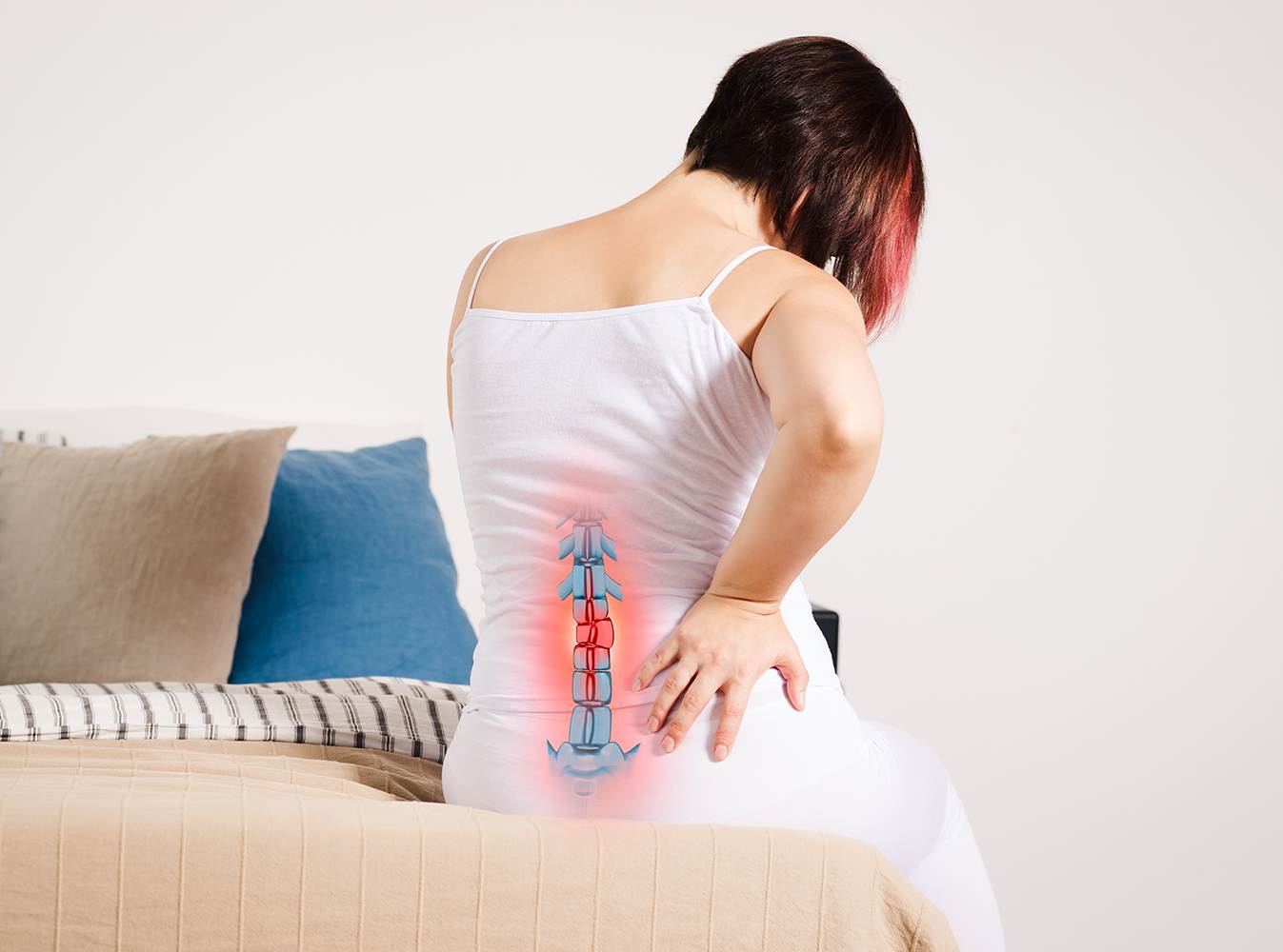
Lumbar disc herniation: what it means and what can help
Hearing “herniated disc” on an MRI report can be unsettling. The finding does not tell the whole story: many people improve over time, and a substantial number of herniations become smaller on follow-up imaging.
This guide explains the disc, common symptoms, what recovery can look like, exercises to discuss with your clinician, treatment choices, surgery and the warning signs that need urgent attention.
Written for education. It cannot diagnose your symptoms or replace an individual clinical assessment.
What is an intervertebral disc?
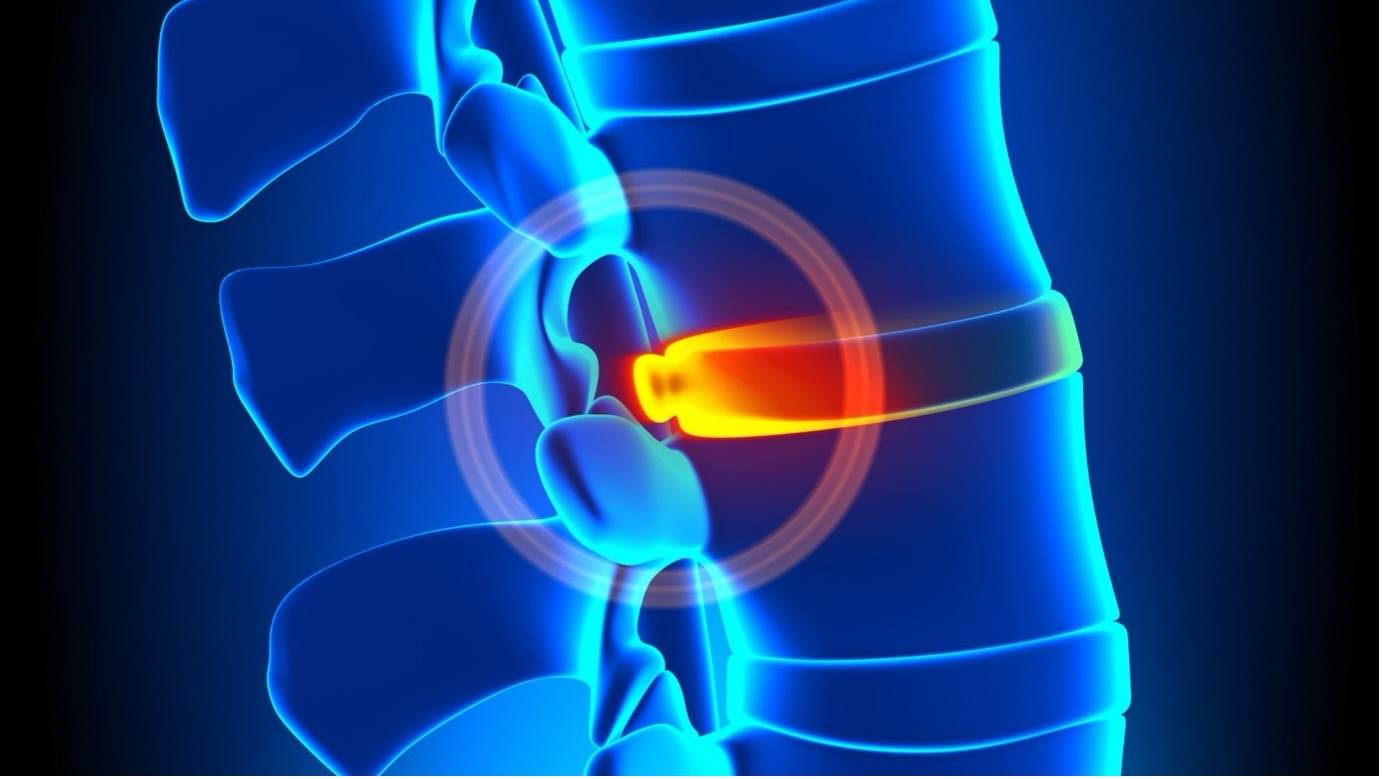
Discs sit between the bones of the spine. They help distribute load and allow the back to move. Each disc has a strong outer ring and a softer, hydrated centre.
Can a herniated disc heal or shrink by itself?
Yes, it can. The body can gradually break down and reabsorb some herniated disc material. In a systematic review of 38 studies involving 2,219 people with symptomatic lumbar disc herniation, follow-up imaging showed some regression in about 63% of cases managed without surgery.
That figure describes a change seen on imaging across the studies. It does not promise that an individual disc will disappear, and it is not the same as saying 63% of people become completely pain-free. Symptoms can improve even when a scan still shows a disc change.
Recovery is often gradual. Pain, nerve sensitivity, strength, sleep and confidence with movement may each change at a different pace. Your clinician can help interpret the scan and track the things that matter in daily life.
showed some imaging regression in one systematic review. The studies varied in design and follow-up, so this is a group estimate, not an individual forecast.Chiu et al., 2020. Systematic review and meta-analysis of symptomatic lumbar disc herniation managed non-surgically.
Common symptoms and what the MRI can tell you
A lumbar herniation may cause back pain, pain travelling into a buttock or leg, pins and needles, numbness or weakness. The exact pattern depends on where the disc is and whether a nerve is irritated.
Symptoms worth discussing with a clinician
- Leg pain that travels below the knee
- Tingling or altered sensation in part of the leg or foot
- Changes in strength, such as difficulty lifting the foot
- Pain that is limiting walking, sleep, work or everyday activity
Why the scan needs context
MRI reports describe structure, not pain by themselves. Disc changes can be present in people who feel well. A clinician compares the scan's level and side with your symptom pattern, movement and strength testing.
Bring the written report and images if you already have them. An MRI is not essential before every first assessment.
Exercises that can support recovery
Research supports exercise as one part of care for many people with lumbar disc herniation, but there is no single routine that suits every back or every nerve. These simple examples are a starting point for discussion with your physiotherapist, not a personalised prescription.
Easy walking
Choose a comfortable, level route. Short, regular walks can help you keep moving without a long session.
Start: 5-10 minutesGentle abdominal set
Lie on your back with knees bent if comfortable. Breathe normally and gently firm your lower tummy without holding your breath or flattening hard.
Try: 5 holds of 5 secondsSupported sit-to-stand
From a firm chair, lean forward comfortably and stand using your legs. Use your hands on the chair or thighs if needed.
Try: 5-8 smooth repetitionsSmall, easy knee sway
Lie on your back with knees bent, feet supported. Let both knees move a small distance to one side, return to centre, then try the other side.
Try: 5 each way, only if comfortableA 2025 systematic review of randomised trials found exercise therapy was associated with improvements in pain and function, while noting that studies have not established one ideal exercise dose or routine for everyone.
Treatments that may be considered
The right plan depends on your symptoms, health history, examination and goals. Treatment often combines a few practical approaches rather than relying on one technique.
Advice and staying active
Support to keep daily movement going at a manageable level, with adjustments for work, sleep, sitting and lifting.
Physiotherapy and exercise
Symptom-guided movement, strength and functional rehabilitation, progressed as your tolerance changes.
Non-surgical spinal decompression
Some people want to explore this option as part of a clinician-led programme. Suitability is assessed individually and treatment is reviewed against symptoms and function.
Read about herniated disc treatment and non-surgical spinal decompression at DC Physiotherapy.
Manual therapy alongside exercise
Hands-on techniques may be included in a wider physiotherapy plan, alongside movement and self-management.
Medical advice
Your GP or specialist can discuss whether medication, further investigation or another option fits your circumstances.
Specialist review
If symptoms are severe, changing or not improving, a clinician can help decide whether a spine specialist should review you.
If you are looking into this treatment, our team can explain the assessment and how a programme is planned. We compare your symptoms, examination and any available scan before discussing whether it may fit your care. See the dedicated treatment page.
What surgery might be offered for a herniated disc?
Many people with a lumbar disc herniation do not go on to have surgery. A spinal specialist may discuss an operation when symptoms and imaging match and pain or loss of function remains significant despite appropriate care. New or worsening neurological problems need prompt medical assessment.
Surgery aims to relieve pressure on a nerve. The exact procedure depends on the location of the disc and the specialist’s findings. The decision should include a clear discussion of expected benefits, risks, recovery and alternatives.
Microdiscectomy or discectomy
A surgeon removes the portion of disc material pressing on a nerve. It is commonly considered for persistent sciatica that corresponds with the scan.
Endoscopic discectomy
A discectomy performed through a small incision using a camera and specialised instruments. Availability and suitability vary by case and service.
Lumbar decompression / laminotomy
A small amount of bone or tissue may be removed to create more space around compressed nerves, sometimes together with disc removal.
Urgent surgery
Severe nerve compression, including cauda equina syndrome, can require emergency hospital assessment and time-sensitive treatment.
Red flags: when to seek medical attention
Most back and leg pain is not an emergency. Some symptoms can signal serious nerve compression and need immediate assessment.
- New difficulty starting urination, inability to pass urine, or loss of bladder control
- Loss of bowel control or not noticing when you need to go
- Numbness around the genitals, inner thighs or the area you would sit on a saddle
- Severe or worsening weakness in both legs, or rapidly progressing leg weakness
- Sciatica affecting both legs, especially with any of the symptoms above
If these symptoms are new, go to an emergency department or call 112 / 999 now. Do not wait for a routine physiotherapy appointment.
For new, substantial weakness in one leg, a significant change in walking, or pain that is rapidly worsening, contact your GP or urgent medical service promptly for advice.
Questions about lumbar disc herniation
Does a herniated disc always need surgery?
No. Many people improve with non-surgical care. Surgery may be discussed for persistent, disabling symptoms that match imaging or when urgent neurological signs require specialist care.
Can the disc material be reabsorbed?
Yes. Follow-up imaging studies show that some herniated material shrinks over time. How much and how quickly varies, and symptoms do not always track the scan exactly.
Should I stop exercising?
Usually, complete rest is not needed. Gentle activity can help maintain movement, but exercises should be adapted if they substantially increase leg symptoms. Ask a clinician for guidance that fits your presentation.
Do I need an MRI?
Not everyone needs an MRI. A clinician may recommend imaging if it is likely to change management, particularly when symptoms are persistent, severe, progressive or accompanied by concerning signs.
Can non-surgical spinal decompression be part of care?
It can be discussed with a clinician as one possible part of a broader plan. An assessment helps determine whether it is appropriate for your symptoms and medical history. Read about DC Physiotherapy's approach.
How long does recovery take?
There is no single timeline. Many people improve over weeks, while nerve symptoms can take longer to settle. Track function and symptom changes, and seek review if you are worsening or not making progress.
Evidence behind this guide
- Chiu CC, Chuang TY, Chang KH, Wu CH, Lin PW, Hsu WY. The incidence of regression after the non-surgical treatment of symptomatic lumbar disc herniation: a systematic review and meta-analysis. Clinical Rehabilitation. 2020. PubMed record.
- Du S, Cui Z, Peng S, et al. Clinical efficacy of exercise therapy for lumbar disc herniation: a systematic review and meta-analysis of randomized controlled trials. Frontiers in Medicine. 2025. Full paper.
- National Institute for Health and Care Excellence. Low back pain and sciatica in over 16s: assessment and management (NG59). Recommendations.
- Health Service Executive. National Clinical Guideline for Cauda Equina Syndrome. HSE guideline.
- Health Service Executive. Sciatica: symptoms, home treatments and when to seek urgent help. HSE information.
- National Health Service. Lumbar decompression surgery. NHS overview.
Leading Non-Surgical Herniated and Bulging Disc Treatment
- Specialised Treatment: Offering tailored care for herniated disc, bulging disc, sciatica, and more.
- Advanced Technology: Utilising state-of-the-art Spinal Decompression machines, including the acclaimed DRX9000 system, proven to alleviate back pain.
- Expert Team: Our skilled physiotherapists are dedicated to providing personalised, effective treatment plans.
- Accessible Location: Easy access for residents of Tallaght, Lucan, and surrounding Dublin areas.
- Comprehensive Care: From diagnosis through recovery, ensuring every aspect of your spinal health is addressed.
At DC Physiotherapy Clondalkin, we redefine the path to recovery for those suffering from herniated and bulging discs. Situated conveniently in Dublin, our clinic stands as a testament to cutting-edge, non-surgical treatment options. With a legacy built on expertise and compassionate care, we specialise in transforming lives through our specialised Spinal Decompression therapy – your alternative to invasive surgery and endless painkillers.
Conditions We Treat
- Herniated or Prolapsed Discs: Discomfort due to disc material pressing on nerve roots, causing pain and numbness. We offer targeted treatments to relieve symptoms and restore function.
- Chronic Lower Back and Neck Pain: Persistent pain affecting daily life, often due to postural issues or overuse. Our therapies aim to alleviate pain and improve posture.
- Sciatica and Nerve Compression: Sharp pain radiating from the lower back to the legs, caused by nerve compression. We provide treatments that reduce nerve pressure and alleviate pain.
- Degenerative Disc Disease: Age-related wear and tear of spinal discs leading to chronic pain. Our clinic offers interventions to reduce discomfort and improve spinal health
- Spinal Stenosis: Narrowing of spinal spaces, pressing on nerves and causing pain or numbness. Our approaches are designed to relieve nerve pressure and enhance mobility.

What our patients say
Trusted by patients across Clondalkin and Dublin
Read experiences shared by patients who came to DC Physiotherapy for physiotherapy, rehabilitation and non-surgical spinal decompression.
Individual experiences and treatment responses vary. An assessment is needed to determine suitable care.
What Our Patients Say...


Your Journey to Recovery Includes
- In-depth Assessment: Understanding the root cause of your pain.
- Personalised Treatment: Customised programs using IDD Therapy and Spinal Decompression.
- Holistic Support: Guidance on lifestyle adjustments and preventive measures.
- Continuous Improvement: Regular progress assessments to adapt your treatment plan.
- Long-Term Relief: Strategies to maintain your spinal health and prevent future issues.
Why Choose DC Physiotherapy?
We specialise in addressing the root causes of herniated and bulging discs through a holistic approach that goes beyond symptom relief.
Our treatments are designed to rehabilitate and restore, focusing on long-term wellness. The spine, a critical axis of your body's mobility and function, receives our utmost care.
We harness the power of IDD Therapy and Non-Surgical Spinal Decompression, groundbreaking techniques that have transformed the lives of countless individuals by offering a genuine alternative to invasive procedures.
- Success Stories: Join the ranks of our many patients who have found relief from chronic back and neck pain.
- Tailored to You: Treatments adjusted to your specific needs, ensuring comfort and effectiveness.
- Beyond Treatment: Empowering you with knowledge for a healthier spine and a better quality of life.
- Trusted in Clondalkin: A well-established clinic known for delivering real results and exceptional care.
- No More Painkillers: Step away from temporary fixes and embrace a lasting solution.