
Effective Non-Surgical Spinal Decompression in Dublin
“Two weeks ago I limped in here, I could hardly walk at all and was basically lying on my back at home and now I’m walking around fine and I can see the light at the end of the tunnel . ” – 👍
Fran Farrell, Back Spasms/Sciatica ⭐⭐⭐⭐⭐
Non-surgical spinal decompression in Dublin
Does this sound like your back or neck pain?
If pain is affecting how you move, sleep, work or enjoy daily life, you may be looking for help with a disc or nerve-related problem. These are some of the symptoms and concerns people come to DC Physiotherapy with.
You may recognise one or more of these
- Lower back pain that keeps returning or is not settling
- Neck pain or stiffness that is limiting your movement
- Pain travelling from your back or buttock down your leg
- Pain travelling from your neck into your shoulder or arm
- Sciatica, with shooting, burning or electric-like leg pain
- Pins and needles or numbness alongside back, neck, arm or leg pain
- Pain that makes sitting, driving, bending or standing difficult
- Disrupted sleep, difficulty walking, or trouble keeping up at work
- An MRI report mentioning a bulging, herniated or degenerative disc
- Ongoing symptoms despite trying other treatment approaches
- Concern about what to do after being told surgery may be an option
- Difficulty returning to exercise, sport or everyday activities
Before-and-after MRI image
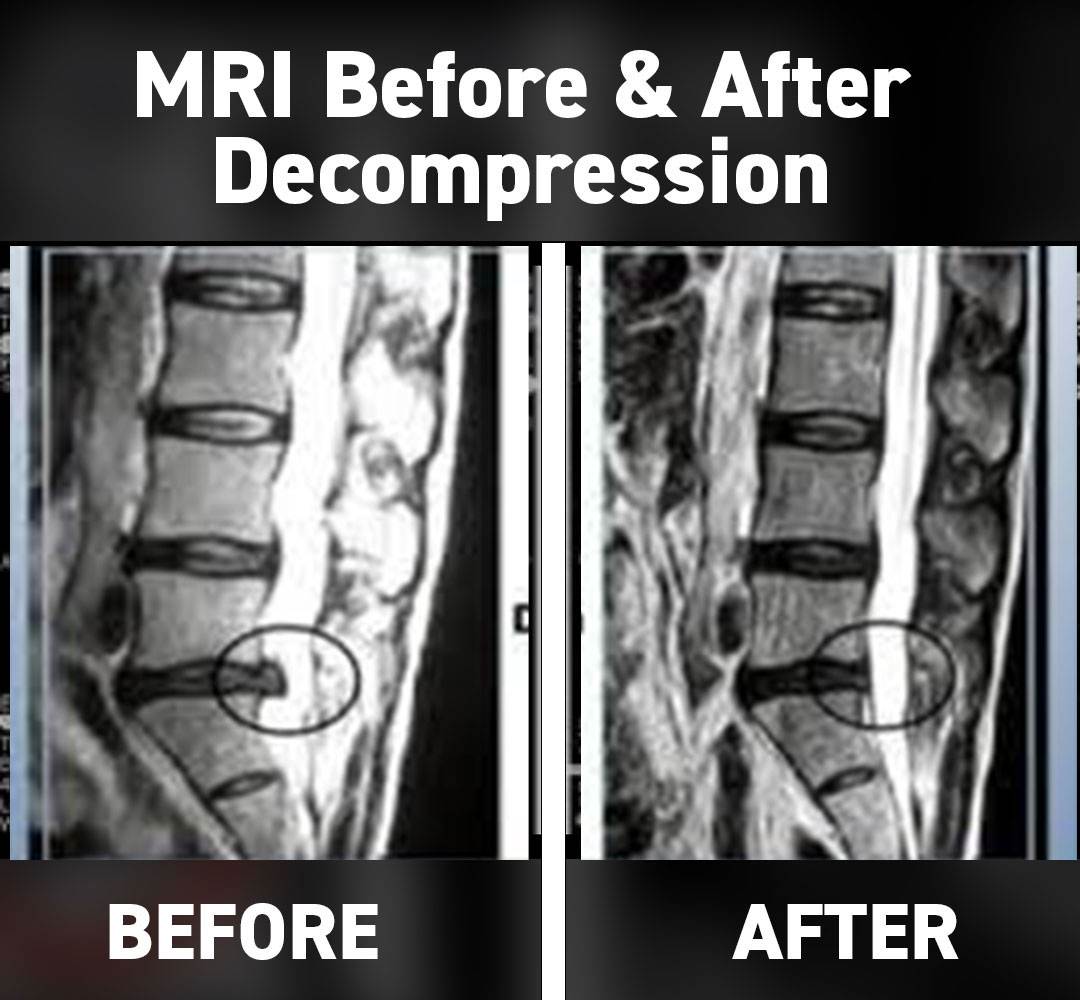
This image shows an individual case. MRI findings and treatment outcomes vary, and an assessment is needed to decide whether spinal decompression is appropriate.
Spinal decompression is not suitable for every cause of back or neck pain. Our team can discuss your symptoms and assess whether this approach may be suitable for you.
Call DC Physiotherapy: 086 199 0706
Attention Back & Neck Pain Sufferers!
- Are you tired of dealing with Low Back or Neck Pain that just won’t go away?
- Are you tired of the constant discomfort and limitations it imposes on your daily life? If so, it’s time to discover the power of Non-Surgical Spinal Decompression in Dublin.
Now you can say Goodbye to your Sciatica, Neck or Low Back pain with Non-Surgical Spinal Decompression!
- Our Cutting-Edge Technology offers a safe, effective and non-invasive solution to relieve the pain caused by sciatica, bulging discs and herniated discs.
What our patients say
Trusted by patients across Clondalkin and Dublin
Read experiences shared by patients who came to DC Physiotherapy for physiotherapy, rehabilitation and non-surgical spinal decompression.
Individual experiences and treatment responses vary. An assessment is needed to determine suitable care.
Book Appointment Now
Play Video Above
Non-surgical spinal decompression in Dublin
Spinal Decompression vs Traction, Physiotherapy & Chiropractic
These treatments can all be used for back or neck problems, but they work in different ways. Here is a clear guide to what each approach involves and how DC Physiotherapy combines assessment with an individual treatment plan.
How do the approaches compare?
The names can sound similar. The main difference is the treatment method and the role it plays in your care.
| Approach | What it involves | How it may be used |
|---|---|---|
| Spinal decompression | A motorised table applies a controlled pulling force, with settings adjusted to the person and treatment area. | May be considered as one part of care for selected people with back or neck pain and suspected disc-related symptoms, following assessment. |
| Conventional traction | A pulling force is applied to the spine using different equipment or techniques. The exact approach varies between providers. | May be used to try to ease symptoms or reduce loading for a period. It is not the same as a complete physiotherapy plan. |
| Physiotherapy | A broad clinical service that can include assessment, education, exercise rehabilitation, manual therapy and self-management advice. | Helps assess movement and function and plan care around a person’s goals. Spinal decompression may be combined with physiotherapy where appropriate. |
| Chiropractic manipulation | A hands-on technique that usually involves a quick, controlled movement at a joint. Techniques differ between practitioners. | May be used by a suitably trained practitioner after considering the person’s history, examination and preferences. |
A useful distinction: spinal decompression is a treatment technique, while physiotherapy is a broader profession and care process. At DC Physiotherapy in Clondalkin, Dublin 22, a clinician first discusses your symptoms and assesses whether non-surgical spinal decompression should form part of your care.
What happens during non-surgical spinal decompression?
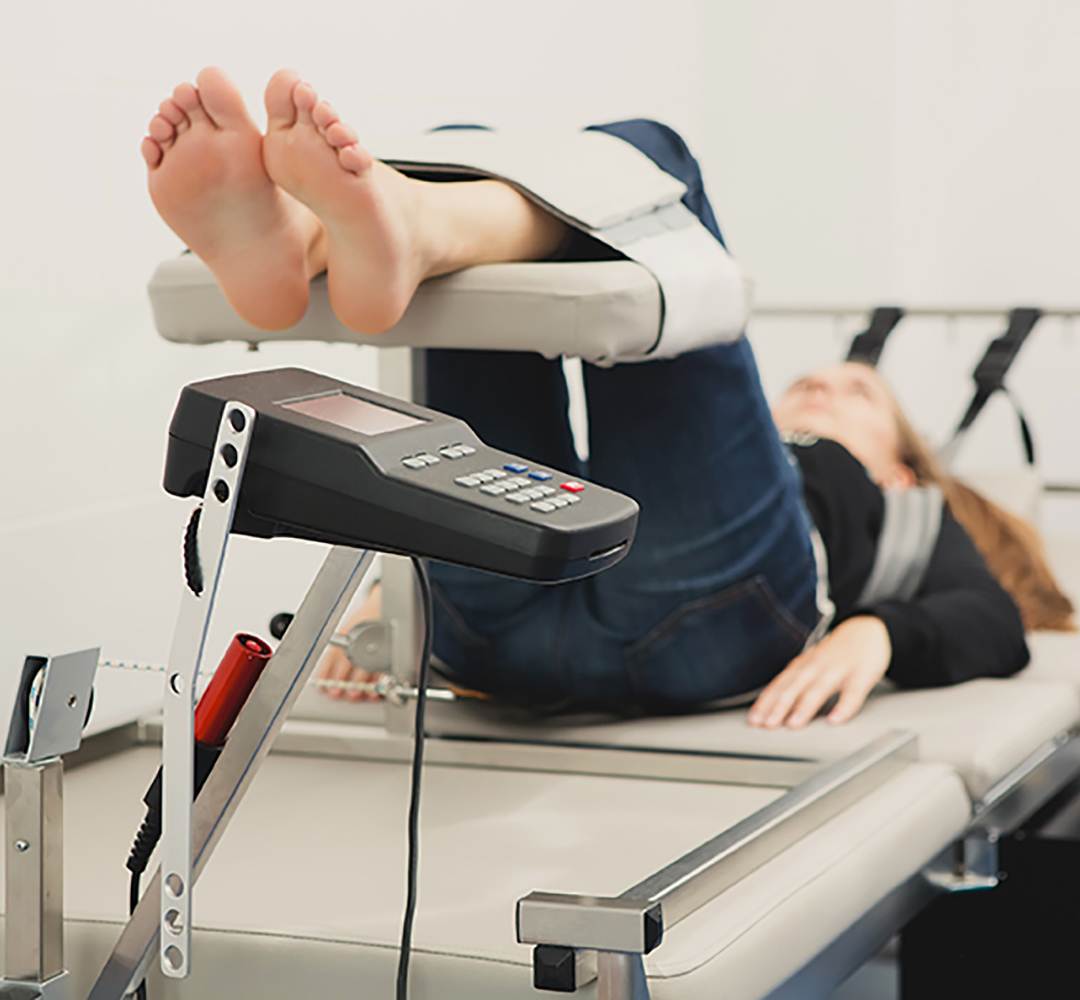
You remain clothed while positioned on a motorised treatment table. The clinician fits supports around the body and adjusts the table to apply a controlled pulling force to the selected area of the spine. The aim is to provide a measured, tolerable treatment experience.
The settings and treatment plan should be based on your assessment and your response. Tell your clinician if you feel increased pain, discomfort or new symptoms during a session.
What can be included in a physiotherapy plan?
Depending on your needs, care may include:
- discussion of your symptoms, health history and goals
- movement and functional assessment
- advice on activity, pacing and self-management
- exercise rehabilitation and gradual return to activity
- manual therapy or other appropriate treatments
- review of progress and adjustment of the plan
An individual before-and-after MRI image shown for information. It does not predict the result another person will have.
What does the before-and-after MRI show?
The image shows an individual case presented by DC Physiotherapy. MRI images can help explain a person’s spinal findings, but a scan alone cannot determine which treatment is right for you or guarantee how you will respond.
Suitability depends on your symptoms, medical history and clinical assessment. Outcomes vary between individuals. The clinician can discuss the image and its limitations during a consultation.
Common questions about spinal decompression
Is spinal decompression the same as ordinary traction?
Both use a pulling force, but spinal decompression typically uses a motorised table with adjustable settings. Equipment and methods vary, so the terms are not always used consistently. Ask your provider how their treatment is delivered.
Is spinal decompression a replacement for physiotherapy?
No. Decompression is one treatment technique. Physiotherapy can include assessment, exercise, advice and other treatments, and may be appropriate alongside or instead of decompression depending on the individual.
Can spinal decompression cure a bulging or herniated disc?
No treatment can guarantee that result. Some people may be considered for decompression as part of conservative care, but the likely benefits and limitations should be discussed after an individual assessment.
How do I know whether I am suitable?
A physiotherapist or other appropriately qualified clinician should review your symptoms, health history and relevant examination findings before recommending treatment. Spinal decompression is not suitable for every cause of back or neck pain.
Unsure which option is right for you?
Talk to DC Physiotherapy in Clondalkin, Dublin 22. We can discuss your back or neck symptoms and explain whether an assessment for non-surgical spinal decompression may be appropriate.
Call 086 199 0706Information is general and does not replace an individual clinical assessment. Treatment suitability and outcomes vary.
Why Choose Us for Non-Surgical Spinal Decompression in Dublin
- We use the best and latest technology available to get the best outcomes for our clients.
- We are the leading practice in Irelands specializing in non surgical spinal decompression for herniated/bulging discs, facet problems, stenosis and chronic back pain.
- We have developed a unique multi treatment approach including Laser Therapy and Exercise Rehabilitation
- Non-Surgical Spinal Decompression sessions are done by a Physiotherapist or Athletic Therapist at DC Physiotherapy
PROGRAMMES OF BACK CARE DESIGNED TO GET YOU OUT OF PAIN AND BACK TO LIVING LIFE TO THE FULL
We specialise in complex and chronic conditions we have designed a selection of Back care programmes intended to get you out of pain and back to living a more fulfilling life whether that is returning to your job, returning to your favourite hobby or sport or playing with your kids or grandchildren.
- IDD Therapy Programme
- Spinal Stenosis Programme
- Herniated, Prolapsed & Bulging Discs Programme
SPEAK TO A THERAPIST ABOUT YOUR SPECIFIC PROBLEM – CALL NOW
Non-Surgical Spinal Decompression Therapy Dublin
Non-Surgical Spinal Decompression Therapy is a revolutionary treatment for Low Back and Neck Pain. DC Physiotherapy Clondalkin offers the latest cutting-edge technology in this field, and we’re trusted experts in treating serious lower back pain, neck pain and sciatica.
Our commitment is to offer best in class treatments to aid your recovery.Non-Surgical Spinal Decompression Therapy is FDA cleared Spinal Decompression technology for the treatment of back pain due to:
- Herniated Discs
- Bulging Discs
- Pinched Nerve
- Sciatica (leg pain)
- Degenerative Disc Disease (DDD)
- Spinal Stenosis
- Post-Surgical Pain
Typically, someone suffering from a spinal disc issue was given pain medication, instructed to stop all physical activities, referred for physiotherapy, and if they weren’t progressing, was sent for spinal surgery. Conservative Physiotherapy proved very helpful in many cases, yet there have been notable cases wherein surgery appeared the only other option… until now.
Thankfully, you needn’t live with pain from disc issues anymore. Thanks to the research of a team of top physicians and medical engineers, Non-Surgical Spinal Decompression Therapy was developed to effectively treat lower back pain, neck pain and sciatica resulting from herniated or degenerated discs. Non-Surgical Spinal Decompression Therapy not only significantly reduces back pain in many people, but also enables the majority of clients to return to more activities they enjoy.
What our patients say
Trusted by patients across Clondalkin and Dublin
Read experiences shared by patients who came to DC Physiotherapy for physiotherapy, rehabilitation and non-surgical spinal decompression.
Individual experiences and treatment responses vary. An assessment is needed to determine suitable care.
Frequently Asked Questions
Newlands Business Park
Newlands Road
Dublin 22