
Elbow Pain? Get a Clear Plan to Move Forward.
Focused shockwave therapy, laser and Chartered Physiotherapy, brought together in a personalised plan for tennis elbow and golfer’s elbow.
Whether pain is stopping you gripping, lifting, working or playing sport, we’ll assess what is driving it and guide your next steps.
What are tennis elbow and golfer’s elbow?
Both conditions involve pain around the tendon attachments near the elbow. The tendons connect forearm muscles to bone and help you grip, move your wrist and fingers, and rotate your forearm.
Tennis elbow
Usually affects the tendon attachment at the outside of the elbow. Its medical name is lateral elbow tendinopathy, also called lateral epicondylalgia or lateral epicondylitis.
Golfer’s elbow
Usually affects the tendon attachment at the inside of the elbow. Its medical name is medial elbow tendinopathy or medial epicondylitis.
The names don’t restrict who can get them: repeated gripping, lifting, throwing, gym training, tool use and other everyday activities can all contribute. Symptoms may appear gradually or after a sudden increase in activity. Pain does not automatically mean permanent tendon damage.
Where is the pain usually felt?
This simple guide shows the typical location. It cannot diagnose the cause of your elbow pain.
Tennis elbow: symptoms, causes and everyday effects
What does tennis elbow feel like?
The usual symptom of tennis elbow is pain or tenderness around the bony area on the outside of the elbow. The discomfort may extend down the outer forearm, and some people feel it when they straighten the wrist or lift with the palm facing down. It may be a dull ache at first and become sharper when you grip or lift.
- Pain when gripping a mug, tool, shopping bag, steering wheel or racket.
- Discomfort when lifting an object with the arm straight or the palm facing down.
- Pain when shaking hands, opening a jar, turning a handle or wringing out a cloth.
- Tenderness if you press the outside of the elbow.
- Reduced confidence or strength when gripping, even if the arm itself feels strong.
- Symptoms that build during repetitive work, sport or household tasks and may remain sore afterwards.
Not everyone has every symptom. Some people notice pain only during a particular task; others find it affects sleep, work or exercise. The intensity can vary from day to day depending on how much the arm has been asked to do, how much recovery time it has had and other individual factors.
What can contribute to tennis elbow?
Tennis elbow can develop when repeated wrist extension, gripping or forearm rotation places more demand on the outer elbow tendon than it can comfortably manage. Examples include repetitive tool use, decorating, food preparation, carrying, racquet sports, weight training, prolonged computer work with a tense grip, or a sudden return to sport after a break. Often there is no single cause. Changes in workload, technique, equipment, recovery, strength or general health can all be relevant and are explored during assessment.
Golfer’s elbow: symptoms, causes and everyday effects
What does golfer’s elbow feel like?
Golfer’s elbow usually causes tenderness or pain around the bony area on the inside of the elbow. The pain can spread down the inner forearm. Repeated gripping and movements that bend the wrist or fingers may aggravate it. You may notice difficulty with tasks that involve squeezing, lifting, pulling or twisting.
- Pain or tenderness on the inner side of the elbow.
- Discomfort that travels from the inside of the elbow into the forearm.
- Pain when gripping, carrying, lifting or pulling.
- Symptoms when bending the wrist, flexing the fingers or turning the palm down against resistance.
- Pain during a golf swing, throwing, racket sport, gym exercise or repetitive manual work.
- Difficulty opening jars, using hand tools, carrying a child or completing work tasks.
Some people also experience tingling or numbness in the ring and little fingers. This can point to irritation of the ulnar nerve or another issue rather than golfer’s elbow alone. Tell your physiotherapist if you notice pins and needles, altered sensation, hand clumsiness or symptoms that travel beyond the elbow.
What can contribute to golfer’s elbow?
Golfer’s elbow can be associated with repeated wrist and finger flexion, forceful gripping and forearm rotation. Golf is one possible trigger, but it can also affect people who lift weights, throw, use tools, perform repetitive kitchen or household tasks, or increase training too quickly. The condition may arise gradually as the tendon is exposed to more load than it is ready for. It is not proof that you have used your arm “wrong”; the useful question is how to adjust the load and rebuild capacity.
Tennis elbow or golfer’s elbow: how can you tell?
Tennis elbow
Typically felt at the outside of the elbow. It is often aggravated by gripping, lifting with the palm down, or resisted wrist and finger extension.
Golfer’s elbow
Typically felt at the inside of the elbow. It is often aggravated by gripping, wrist or finger flexion, and forearm rotation.
This comparison is a guide, not a diagnosis. Pain around the elbow can also come from the neck, shoulder, joint, a nerve, another tendon or an injury. Inner elbow pain with tingling, an elbow that locks, marked swelling, a sudden loss of movement, or pain after a significant accident deserves careful assessment. If symptoms do not fit the usual pattern, your physiotherapist can discuss whether you need a GP or other medical review.
How is elbow tendinopathy assessed?
Your first appointment at DC Physiotherapy begins with a conversation about when the pain started, what makes it better or worse, how it affects daily life and what you want to get back to. We may ask about your job, sport, recent changes in activity, previous injuries, general health and any numbness or tingling. These details help us understand the demands on your arm and check for signs that another diagnosis should be considered.
The physical assessment may include looking at elbow and wrist movement, checking grip and forearm strength, and using carefully selected tests to see which movements reproduce your familiar pain. We may also assess the neck, shoulder, hand or nerve function when indicated. The assessment is adapted to your comfort and is not a contest of how much pain you can tolerate.
Scans are not routinely required to identify a typical case of tennis elbow or golfer’s elbow. If the story or examination suggests a different problem, if there has been significant trauma, or if symptoms are not progressing as expected, imaging or a medical opinion may be discussed. We explain why any onward referral might be useful.
Our combined tennis elbow and golfer’s elbow treatment approach
At DC Physiotherapy, we combine modern treatment options with Chartered Physiotherapy to create a coordinated plan for tennis elbow and golfer’s elbow. Your plan is built around your symptoms, assessment findings, work and sport demands, health history and goals. The aim is to address the painful tendon, help you move more comfortably and rebuild the strength and tolerance needed for the activities that matter to you.
Focused shockwave therapy, laser therapy and physiotherapy each have a distinct role. They are selected and combined according to your presentation. Some patients may benefit from both modalities alongside rehabilitation; others may be better suited to a different mix. Your physiotherapist will explain the proposed plan and review your progress with you.
1. Practical activity and load advice
Complete rest is rarely a useful long-term plan for a tendon problem, but repeatedly pushing through a strong flare can make it harder to settle. We help you identify which tasks are most provocative and look for realistic short-term changes. Depending on your situation, this might mean reducing the weight or number of repetitions, taking brief breaks, changing the way you hold a tool, adjusting a training session, or temporarily sharing a demanding task between both arms. The aim is to keep you moving where possible while avoiding repeated overload.
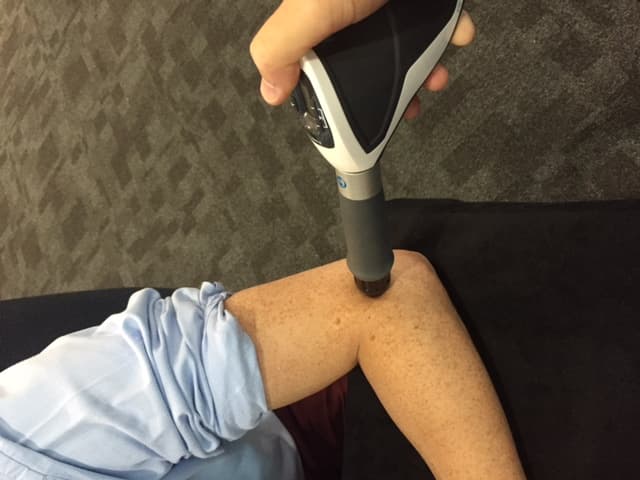
2. Focused shockwave therapy for the painful tendon
Focused shockwave therapy uses acoustic energy concentrated at a selected treatment area. At DC Physiotherapy, it can be directed towards the tendon region involved in tennis elbow or golfer’s elbow after your physiotherapist has assessed your symptoms. The treatment is delivered as part of a wider plan, with the aim of addressing persistent tendon pain and helping you progress with rehabilitation. Your clinician will explain what the session involves and whether focused shockwave is suitable for you.
3. Laser therapy as part of the treatment plan
Laser therapy provides another non-invasive option that may be included alongside physiotherapy and focused shockwave. It can be used to support the management of the painful area and is selected according to your presentation and treatment goals. Your physiotherapist will explain how laser fits into your plan and what to expect. It is used as part of a coordinated approach, rather than as a replacement for rebuilding strength and function.
4. Progressive strengthening and rehabilitation
Exercise is a central part of restoring the arm’s capacity. The starting point may be gentle wrist and forearm movement or an isometric hold; over time, exercises can progress to controlled strengthening for the wrist, forearm, grip and related shoulder muscles. The right exercise, resistance and pace depend on your examination and how your symptoms respond. A tailored programme can help restore strength and confidence for lifting, gripping, work, sport and daily activities.
We explain how to monitor your response so that a manageable temporary increase in symptoms does not automatically lead to stopping all activity. Exercises should be progressed in a way you can sustain. Your Chartered Physiotherapist can review and adjust the programme as your capacity changes.
5. Hands-on Chartered Physiotherapy and clinical guidance
Depending on your needs, physiotherapy may include advice, movement coaching and hands-on techniques to support comfort and mobility. These approaches are considered alongside active rehabilitation rather than as a stand-alone promise of a cure. We will explain the purpose of each part of the plan and focus on the activities you are working towards.
Why choose the DC Physiotherapy approach?
Your elbow care can bring together focused shockwave, laser and Chartered Physiotherapy in a single, joined-up plan. That means your treatment is guided by an assessment, supported by modern modalities where appropriate, and linked to practical rehabilitation for your work, sport and day-to-day life. Rather than relying on a generic programme or one isolated technique, we coordinate the elements of care around your individual needs.
We monitor how you respond and adjust the plan as your symptoms and function change. The goal is to help you make progress with a clear pathway from pain management towards stronger, more confident use of your arm.
Suitability and response vary from person to person. Your physiotherapist will explain the options and agree your plan with you.
What can you do at home while elbow pain settles?
These general ideas may help while you arrange an assessment or follow your treatment plan. They are not a substitute for advice tailored to your own symptoms.
- Stay active within tolerance. Try to keep comfortable movement in the elbow, wrist and hand rather than immobilising the arm for long periods.
- Temporarily adjust aggravating tasks. Reduce the force, duration or repetition that causes a clear flare, then build back gradually.
- Vary your grip and position. A lighter grip, two hands for heavier objects, or a change in tool or work position may reduce strain for some tasks.
- Use a cold or warm pack if it feels helpful. Wrap it in a towel, use for a short period, and avoid placing extreme temperatures directly on the skin.
- Ask a pharmacist or GP about pain relief if needed, especially if you have other conditions, take medication, are pregnant or are unsure what is safe for you.
- Return to sport progressively. Modify practice volume, grip, equipment or technique where relevant, and increase demands in stages rather than making a sudden jump.
Braces or forearm straps help some people manage symptoms for particular activities, but they are not essential for everyone and do not rebuild tendon capacity on their own. A physiotherapist can help you decide whether a trial makes sense.
When should you seek an assessment?
Consider booking a physiotherapy assessment if elbow pain is limiting work, sport, sleep or routine tasks; if it keeps returning; if you are unsure whether it is tennis elbow or golfer’s elbow; or if it has not improved with sensible changes to activity. Early guidance can help you understand what may be contributing and plan a gradual return to the tasks you value.
Seek urgent medical advice after a major injury, if the elbow looks deformed, is very swollen or hot, you cannot move it, or you have sudden severe pain. Contact a healthcare professional promptly if you have persistent numbness, progressive weakness, hand clumsiness, fever, unexplained weight loss or other symptoms that concern you. If you are unsure where to go, contact your GP or local urgent care service for advice.
Book tennis elbow or golfer’s elbow physiotherapy in Clondalkin
DC Physiotherapy is based at Unit 4, Newlands Business Park, Newlands Road, Clondalkin, Dublin 22. We see people from Clondalkin, Tallaght, Lucan, Palmerstown, Ballyfermot, Citywest, Park West and across Dublin who want help with elbow pain and a clear plan for returning to normal activity.
Your appointment starts with an individual assessment. We will discuss what may be causing your symptoms, explain the treatment options that fit your case and agree practical next steps. You can book directly with the clinic; if you are unsure which appointment to choose, call us and we can help.
DC Physiotherapy, Unit 4, Newlands Business Park, Newlands Road, Clondalkin, Dublin 22. Individual assessment is required to determine diagnosis and suitability for treatment.
Frequently asked questions about tennis elbow and golfer’s elbow
Can you have tennis elbow without playing tennis?
Yes. Tennis elbow can affect people who do not play tennis. Repetitive gripping, lifting, wrist movement, manual work, gym training and other activities can contribute.
Can you have golfer’s elbow without playing golf?
Yes. Golfer’s elbow is a common name for pain around the inner elbow tendon. It can occur with repeated gripping, lifting, wrist bending, throwing or tool use, even if you have never played golf.
How do I know if I have tennis elbow or golfer’s elbow?
Tennis elbow is usually felt on the outside of the elbow, while golfer’s elbow is usually felt on the inside. Other conditions can cause similar pain, so an assessment is the best way to check whether the pattern fits and whether further review is needed.
Will I need an MRI or ultrasound scan?
Most typical cases can be assessed through your history and physical examination without a scan. Imaging may be considered if the diagnosis is uncertain, there has been significant trauma or symptoms are not following the expected course.
What is focused shockwave therapy?
Focused shockwave therapy uses acoustic energy concentrated at a selected area. Your physiotherapist can assess whether it is appropriate for your elbow symptoms and explain how it may be combined with laser therapy and rehabilitation in your care plan.
Why combine focused shockwave, laser and physiotherapy?
The combined approach brings targeted treatment options together with assessment, load advice and progressive strengthening. Each part has a role in your personalised plan, and the exact combination depends on your symptoms, goals and clinical assessment.
Should I stop working or exercising?
Usually, complete rest is not needed, but you may benefit from temporarily modifying tasks that repeatedly cause a strong flare. Your plan can help maintain activity while gradually rebuilding your tolerance for work, exercise and sport.
How long does tennis elbow or golfer’s elbow take to improve?
Recovery time varies with symptom duration, severity, daily demands and individual health factors. Some cases improve over weeks; more persistent symptoms can take longer. Your physiotherapist can help set realistic milestones and review whether the plan is progressing.
Do I need a GP referral to book?
You can contact DC Physiotherapy directly to ask about an appointment. If your symptoms suggest that medical review is needed, we will explain that during the assessment process.
Further reading
For general information about tennis elbow, see the NHS tennis elbow guide. For golfer’s elbow, see NHS Inform’s golfer’s elbow guide. The British Elbow and Shoulder Society provides patient guidance and exercises. These resources do not replace individual assessment.
What our patients say
Trusted by patients across Clondalkin and Dublin
Read experiences shared by patients who came to DC Physiotherapy for physiotherapy, rehabilitation and non-surgical spinal decompression.
Individual experiences and treatment responses vary. An assessment is needed to determine suitable care.