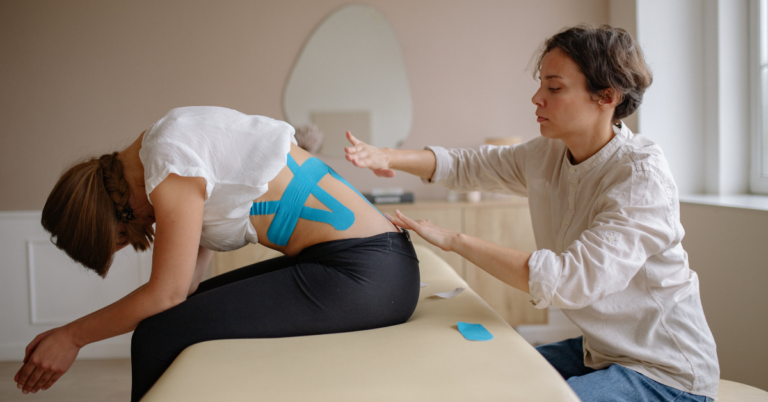
Spinal Stenosis Treatment in Dublin
Specialist assessment and non-surgical care for people with lumbar spinal stenosis, reduced walking tolerance, leg pain, numbness or heaviness. Treatment is based on your symptoms, examination and MRI findings rather than the scan wording alone.
What is spinal stenosis?
Spinal stenosis means that part of the space available for the spinal nerves has narrowed. In the lower back, it may affect the central spinal canal, the side channels or the openings where individual nerves leave the spine. It can cause leg pain, numbness, weakness or heaviness that builds during standing and walking and eases when sitting or bending forward.
Specialist Spinal Stenosis Treatment in Dublin
Spinal stenosis can gradually reduce how far you can walk, how long you can stand and how confidently you move through everyday life. Your legs may become painful, heavy or numb in a shop, while cooking or after walking a predictable distance.
DC Physiotherapy provides spinal stenosis treatment in Dublin from our clinic in Clondalkin, Dublin 22. We assess whether symptoms are being driven by central canal narrowing, lateral recess stenosis, foraminal narrowing or another condition that can produce a similar pattern.
Our goal is to determine whether conservative treatment is appropriate and create a measurable programme focused on walking, standing and normal daily function.
People commonly contact us because they:
- Develop pain, heaviness or numbness while walking
- Feel better when sitting or leaning forward
- Can walk further when leaning over a shopping trolley
- Have an MRI showing central or foraminal stenosis
- Have persistent symptoms despite previous treatment
- Want to explore a non-surgical option before an injection or operation
Bring any existing MRI report or consultant letter. Imaging must be interpreted alongside your symptoms and examination.
Common Symptoms of Lumbar Spinal Stenosis
The typical pattern is known as neurogenic claudication. Symptoms usually build while standing or walking and improve with sitting, resting or bending forward.
Reduced walking distance
Pain, tingling, heaviness or weakness appears after walking a particular distance.
Symptoms while standing
Standing in a queue, cooking or remaining upright brings on leg or lower-back symptoms.
Relief when sitting
Sitting or bending forward can temporarily create more space around sensitive nerves.
Leg pain or numbness
Symptoms may affect one or both buttocks, thighs, calves or feet and can resemble sciatica.
Heavy or unreliable legs
The legs may feel weak, heavy or less dependable during standing or walking.
The shopping-trolley sign
You may walk further when leaning forward over a trolley, walking aid or bicycle handlebars.
Types of Spinal Stenosis We Assess
Central canal stenosis
Narrowing within the main spinal canal can affect the bundle of lumbar nerves and may produce symptoms in both legs.
Lateral recess stenosis
Narrowing in the side channel can irritate a nerve before it exits the spine, producing pain, tingling, numbness or weakness.
Foraminal stenosis
Narrowing where a nerve leaves the spine may involve disc-height loss, a protrusion, facet enlargement or bony change.
Disc-related narrowing
A disc bulge or protrusion can reduce the available space around a nerve and contribute to mechanical symptoms.
Degenerative stenosis
Changes involving discs, facet joints and spinal ligaments may combine to reduce space around the nerves over time.
Cervical spinal stenosis
Narrowing in the neck can affect the spinal cord. Changes in balance, hand coordination or limb strength need prompt medical assessment.
Are You Suitable for Conservative Treatment?
Many people with stable lumbar spinal stenosis begin with non-surgical care when there is no urgent or progressive neurological problem.
- Your symptoms have a recognisable stenosis or nerve pattern
- Standing or walking brings on symptoms that ease with sitting
- Your MRI findings correspond with your presentation
- You do not have progressive neurological loss
- You want to explore appropriate non-operative treatment
- You can participate in progressive rehabilitation
A scan can describe narrowing as mild, moderate or severe, but that description alone does not decide treatment. We match imaging with strength, sensation, reflexes, movement and functional limitations.
When Specialist Medical Review Is Needed
Conservative care must not delay review where findings suggest significant or progressive nerve compromise.
- Progressive weakness or neurological loss
- Severe central stenosis with major walking restriction
- New balance, coordination or hand-function problems
- Spinal instability, fracture, infection or suspected tumour
- Persistent disabling symptoms despite appropriate care
- Bladder, bowel or saddle-sensation changes
Your Treatment Journey at DC Physiotherapy
Clinical assessment
We discuss walking tolerance, symptom behaviour, medical history, previous treatment and goals, then assess movement and neurological function.
Scan correlation
If you have an MRI, we identify the type and location of narrowing and whether it corresponds with your symptoms.
Personalised programme
Suitable patients begin a programme that may combine physiotherapy, decompression, laser therapy and exercise.
Review and progression
We monitor walking distance, standing tolerance, leg symptoms and function, adapting or referring onward according to response.
How We Treat Lumbar Spinal Stenosis
There is no single treatment for every person. Your programme is selected according to the type of narrowing, symptom severity, neurological findings, physical capacity and goals.
Physiotherapy and education
We identify positions and activities that modify symptoms and provide practical strategies for walking, standing and daily tasks.
Non-surgical decompression
For a suitable disc-related, lateral recess or foraminal presentation, controlled decompression may reduce loading around an irritated segment or nerve.
Progressive exercise
Rehabilitation may include flexion-tolerant aerobic work, mobility, trunk and leg strengthening, balance and functional progression.
Manual care and low-level laser therapy may also be included where appropriate. Treatment should be judged by measurable functional change, not attendance alone.
Can Spinal Decompression Help Spinal Stenosis?
It may help some carefully selected patients, but spinal stenosis is not one uniform condition. Decompression cannot remove bone or permanently enlarge a canal severely narrowed by fixed bony change.
It may be considered where disc bulging, reduced disc height, lateral recess narrowing or foraminal narrowing contributes to nerve irritation and conservative care remains appropriate. The aim is to reduce loading, improve symptom tolerance and help rehabilitation.
We do not recommend decompression simply because an MRI contains the word “stenosis.” The cause, location, severity, symptoms and neurological examination must support the decision.
Learn more about non-surgical spinal decompression in Ireland.
When Decompression Is Not Suitable
- Severe central stenosis with progressive neurological loss
- Lumbar fusion across the proposed treatment area
- A recent or unstable vertebral fracture
- Severe osteoporosis or significant instability
- Spinal infection, active cancer or serious pathology
- Cauda equina symptoms or spinal-cord compression
What Does the Evidence Say?
Research supports an individualised, multimodal approach to lumbar spinal stenosis with neurogenic claudication. A clinical practice guideline recommends education, lifestyle advice and exercise, manual therapy or rehabilitation as an initial non-surgical option.
A 2022 review found that some physiotherapy programmes improved pain, walking tolerance, disability or quality of life, although evidence quality varied. A 2024 review found successful exercise programmes commonly included stretching, strengthening or trunk exercise and aerobic fitness work, particularly cycling.
The evidence for motorised decompression specifically in fixed degenerative stenosis is less developed than for traction-based care in disc herniation or radiculopathy. Our interpretation is careful: decompression can be considered when a suitable disc or foraminal component is present, but it should sit within rehabilitation and be reviewed against functional progress.
Selected research: Bussières et al., 2021 · Ammendolia et al., 2022 · Temporiti et al., 2022 · Comer et al., 2024.
Physiotherapy, Decompression, Injection or Surgery?
The correct pathway depends on the type of stenosis, severity, neurological findings, functional restriction and response to appropriate care.
| Approach | Typical role | Important consideration |
|---|---|---|
| Physiotherapy | Education, movement, strength, balance and graded improvement in walking. | Often first-line where there is no urgent neurological problem. |
| Non-surgical decompression | Controlled unloading for selected disc-related or foraminal presentations. | Cannot remove fixed bony narrowing and requires screening. |
| Spinal injection | May reduce pain or inflammation and create a rehabilitation window. | Benefits, suitability and risks require medical discussion. |
| Laminectomy or surgery | Creates more room for nerves and may be required for advanced stenosis. | Should not be delayed where neurological function is worsening. |
Why Choose DC Physiotherapy?
Clinical leadership
DC Physiotherapy was founded in 2014. Clinical Director David Carpenter is a CORU-registered physiotherapist with more than 14 years of experience.
Disc and nerve focus
Our team regularly assesses spinal stenosis, sciatica, disc protrusions, herniations and neurological symptoms.
Dedicated technology
Our clinic has specialist lumbar and cervical decompression equipment for suitable presentations.
Complete rehabilitation
Decompression can be combined with physiotherapy, manual care, laser therapy and progressive exercise.
Measurable outcomes
We monitor walking, standing, sleep and daily function rather than relying only on pain scores.
Honest selection
We recommend conservative treatment when findings support it and advise specialist review when safer.
Page prepared by the DC Physiotherapy Clinical Team. Clinical oversight: David Carpenter, CORU-registered Physiotherapist and Clinical Director. Last updated November 2026.
Spinal Stenosis Care in Dublin 22
DC Physiotherapy is at Unit 4, Newlands Business Park, Newlands Road, Clondalkin, Dublin 22. Patients attend from Clondalkin, Tallaght, Lucan, Palmerstown, Ballyfermot, Park West, Citywest and across Dublin and Ireland.
Bring any MRI, report or consultant letter. We will explain which findings are important and whether they correspond with your symptoms.
Clinic: Unit 4, Newlands Business Park, Dublin 22
Telephone: 086 199 0706
Appointments: Monday to Saturday
Referral: No GP referral required
What our patients value
Patients frequently tell us that understanding what their MRI means and having a structured plan with clear review points helps them feel more confident about their choices.
See verified experiences on our testimonials page.
DC Physiotherapy, Clondalkin
Frequently Asked Questions
What is the best treatment for spinal stenosis?
It depends on the type and severity of narrowing, neurological findings and walking restriction. Stable lumbar stenosis is often managed initially with physiotherapy, exercise and activity modification. Selected disc-related or foraminal presentations may suit decompression. Progressive neurological loss may require surgical review.
Can spinal stenosis be treated without surgery?
Yes. Many people begin with conservative treatment where there is no urgent neurological problem. Treatment can improve pain, walking, strength and function even though narrowing remains visible on MRI.
Can spinal decompression help spinal stenosis?
It may help when disc bulging, reduced disc height, lateral recess narrowing or foraminal narrowing contributes to nerve irritation. It cannot remove bone or reverse every form of severe central stenosis.
What is the difference between spinal stenosis and sciatica?
Stenosis is narrowing around the spinal canal or nerve openings. Sciatica describes symptoms travelling along the sciatic nerve pathway. Stenosis is one possible cause of sciatica.
Is walking good for spinal stenosis?
Walking can remain valuable but should be adapted. Shorter intervals, rests or a slight forward lean may be more comfortable. Cycling may be useful when upright walking is limited.
Why can I walk further leaning over a shopping trolley?
Leaning forward places the lower back in flexion, which can temporarily increase space around sensitive nerves in some stenosis presentations.
What does severe stenosis on MRI mean?
It describes the imaging appearance. Importance depends on whether it matches symptoms and neurological findings. Severe narrowing with worsening weakness or bladder, bowel or saddle changes needs prompt assessment.
Do I need an MRI before attending?
No. It is not required before every assessment, although it can be helpful in persistent, complex or progressive presentations. Bring any existing imaging.
How many decompression sessions will I need?
Where appropriate, a typical programme may involve approximately 10 sessions. The recommendation depends on the stenosis, symptoms, neurological findings and early response.
Can spinal stenosis get better?
Symptoms and function can improve even though structural narrowing remains visible. Response varies with severity, general health, activity tolerance and neurological findings.
When is surgery considered?
It may be considered when symptoms remain severely disabling despite care, walking is extremely restricted or neurological function is worsening.
Is spinal decompression covered by health insurance?
Physiotherapy benefits depend on the policy. Non-surgical spinal decompression itself is generally not covered by Irish health insurers.
Do I need a GP referral?
No. If imaging, medication review or specialist input is required, your therapist will explain the next step.
Where can I get spinal stenosis treatment in Dublin?
DC Physiotherapy provides specialist assessment and non-surgical care at Unit 4, Newlands Business Park, Clondalkin, Dublin 22. Call 086 199 0706 or book online.
Find Out What Your Spinal Stenosis Means
If leg pain, numbness, heaviness or reduced walking is limiting your life, start with a proper assessment. We will explain your symptoms and scan findings, determine whether conservative treatment is appropriate and give you a clear plan.