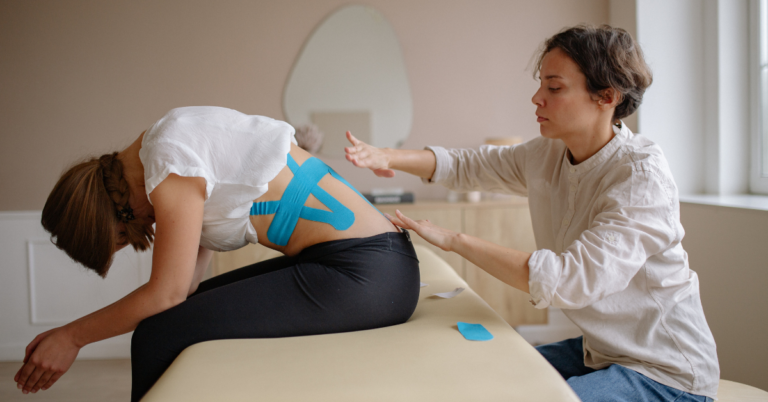
Non-Surgical Spinal Decompression in Ireland
Specialist, non-invasive treatment for people living with sciatica, herniated or bulging discs, degenerative disc problems and disc-related neck or back pain. At DC Physiotherapy, decompression is delivered as part of a personalised clinical and rehabilitation programme—not as a one-size-fits-all treatment.
What is non-surgical spinal decompression?
Non-surgical spinal decompression is a form of controlled, motorised traction designed to reduce loading around spinal discs and irritated nerves. A patient lies on a specialist table while the therapist applies a carefully selected distraction force to the neck or lower back. It may help suitable patients with disc-related pain move more comfortably and progress through active rehabilitation without injections or an operation.
Specialist Spinal Decompression Treatment in Ireland
When back or neck pain begins to affect your sleep, work, walking or family life, it can be difficult to know what to try next. You may have already used medication, completed standard physiotherapy or been told that an injection or surgery could be the next step.
DC Physiotherapy provides non-surgical spinal decompression in Ireland from our specialist clinic in Clondalkin, Dublin 22. We assess people with persistent and complex disc-related conditions, including patients travelling to us from outside Dublin in search of a structured conservative option.
Our goal is simple: determine what is driving your symptoms, establish whether decompression is appropriate and create a measurable plan to help you return to the activities that pain has taken away.
People commonly contact us because they:
- Have sciatica or pain travelling into an arm or leg
- Have an MRI showing a bulging, protruding or herniated disc
- Cannot sit, stand, walk or sleep comfortably
- Have persistent symptoms despite previous treatment
- Want to explore a non-surgical option where clinically appropriate
- Need a clear explanation of their scan and realistic choices
An MRI is helpful but is not required for every person. We consider your symptoms, examination and imaging together.
How Does Spinal Decompression Work?
During treatment, you are positioned comfortably on a specialist decompression table and fitted with a support harness. The system applies a gradual, controlled pull through a selected area of the spine, followed by a relaxation phase. The force, angle, duration and treatment position are chosen according to your body, symptoms and the spinal level being treated.
The clinical aim is to reduce mechanical loading through the affected segment and ease irritation around a sensitive disc or nerve root. This can create an opportunity for symptoms to settle, movement to improve and rehabilitation exercises to become more tolerable.
Targeted unloading
Controlled distraction is directed towards the relevant lumbar or cervical region rather than applying a general stretch to the whole body.
Symptom reduction
For a suitable patient, reducing pressure and irritation may ease back or neck pain and symptoms travelling into an arm or leg.
Rehabilitation window
As pain and guarding reduce, we progressively rebuild movement, strength and tolerance for normal activity.
Conditions We Assess for Non-Surgical Spinal Decompression
Herniated or prolapsed disc
Disc material can irritate a spinal nerve and cause local pain, sciatica, arm pain, pins and needles or numbness.
Bulging disc
A disc bulge may contribute to nerve or mechanical symptoms when its location corresponds with the patient’s clinical presentation.
Sciatica
Sciatica describes symptoms along the sciatic nerve and may be linked to disc herniation, foraminal narrowing or other causes.
Degenerative disc disease
Age-related disc changes can contribute to stiffness, reduced load tolerance and recurring neck or lower-back pain.
Selected spinal stenosis
Some people with foraminal or central narrowing may benefit, but stenosis varies considerably and careful screening is essential.
Disc-related neck pain
Cervical disc problems can cause neck pain with symptoms into the shoulder, arm or hand. Cervical treatment requires a specific assessment and setup.
Are You a Good Candidate?
You may be a good candidate for non-surgical spinal decompression when your symptoms, physical examination and any available scan findings indicate a disc-related condition or nerve-root irritation that can be treated conservatively.
- Your pain follows a recognisable disc or nerve pattern
- You have a disc protrusion, extrusion or bulge that matches your symptoms
- Sitting, bending or spinal loading aggravates your pain
- You have reached a plateau with other conservative treatment
- You want to explore suitable non-operative care before surgery
- You can participate in a progressive rehabilitation programme
Suitability is not decided from an MRI sentence alone. Disc changes are common even in people without pain, so we match the scan with your history, neurological signs, movement and functional limitations.
When Decompression Is Not Suitable
Decompression is not appropriate for everyone. Depending on the region being treated and the individual presentation, contraindications or reasons for specialist medical review can include:
- Spinal fusion or certain implants in the proposed treatment area
- A recent or unstable spinal fracture
- Severe osteoporosis or significant spinal instability
- Spinal infection, active cancer affecting the spine or another serious pathology
- Pregnancy, depending on the treatment region and clinical circumstances
- Severe cervical rheumatoid instability
- Progressive neurological loss or a presentation requiring urgent investigation
Your Treatment Journey at DC Physiotherapy
Clinical assessment
We discuss your symptoms, history, previous treatment, daily limitations and goals, then examine movement and relevant neurological signs.
Scan correlation
If you have an MRI, we identify the important findings and determine whether they are consistent with your symptoms. Imaging is arranged only when clinically indicated.
Personalised programme
If you are suitable, we select the table, position, spinal level and starting force, then adjust treatment according to your response.
Review and progression
We monitor pain, sleep, movement and functional goals, progressing rehabilitation or referring onward when the expected improvement is not occurring.
What Does a Treatment Session Feel Like?
You remain fully clothed and lie on the decompression table. A comfortable harness or support system helps direct the treatment to the appropriate region. Most people notice a gradual stretching or unloading sensation rather than a forceful pull.
Your therapist remains in control of the settings, and the table includes a patient safety switch. Treatment can be modified or stopped if your symptoms do not respond as expected. Some people experience short-lived muscular soreness or a temporary fluctuation in symptoms, particularly early in a programme, which is why every response is reviewed rather than automatically increasing the force.
A typical appointment may also include reassessment, manual treatment, low-level laser therapy or rehabilitation exercises, depending on your individual plan.
How Many Sessions Will You Need?
There is no correct number for every condition. At DC Physiotherapy, a typical decompression programme consists of approximately 10 sessions, but the recommendation depends on the condition, duration, severity and early response.
We set review points and look for changes that matter to you: walking further, sleeping better, sitting longer, returning to work or reducing arm or leg symptoms. If treatment is not producing a meaningful benefit, the plan should be changed rather than continued indefinitely.
A single non-surgical spinal decompression session currently costs €170. A 10-session programme costs €1,250, while a six-session programme costs €1,000. Visit our pricing page for the latest information.
Decompression Works Best as Part of a Complete Programme
Reducing pain can help you move, but long-term recovery also requires rebuilding the capacity of your spine and surrounding muscles. That is why we do not treat decompression as a passive stand-alone solution.
Non-surgical decompression
Controlled treatment aimed at reducing disc and nerve loading and improving tolerance for movement.
Physiotherapy and manual care
Appropriate hands-on treatment, mobility work and practical advice based on the findings of your assessment.
Exercise rehabilitation
Progressive strength, control and functional exercises selected for your condition, goals and stage of recovery.
Low-level laser therapy may also be included when clinically appropriate. The exact combination is individual: the right programme is the one that addresses your presentation and produces measurable progress.
Does Non-Surgical Spinal Decompression Work?
There is evidence that traction-based care can improve pain and disability for some people with lumbar disc herniation or radiculopathy, but results vary and the published studies use different devices, treatment protocols and patient groups.
A 2025 systematic review and meta-analysis examined exercise, manipulation and traction in the conservative management of lumbar disc herniation. Each approach was associated with improvements, and traction produced the largest pooled effect size. However, the analysis was affected by very high variation between studies and indications of publication bias. The result should therefore not be interpreted as proof that traction is superior for every patient.
A systematic review of randomised trials involving imaging-confirmed herniated discs found greater short-term improvement in pain and function with mechanical traction compared with sham or no traction. It did not establish significant long-term effects or a reliable reduction in disc size. A 2022 meta-analysis also reported improvement in pain and disability when mechanical traction was added to routine physiotherapy.
A small randomised trial specifically comparing a non-surgical decompression programme with conventional care found improvement in both groups but did not demonstrate a statistically significant advantage in disc-height or herniation-size outcomes. This is why we do not promise that a machine will “heal” every disc or use MRI change as the only measure of success.
Our interpretation is practical: decompression may be a valuable part of conservative care for a properly selected patient, especially when combined with rehabilitation and monitored against clear functional outcomes.
Selected research: Thavarajasingam et al., 2025 · Cheng et al., 2020 · Wang et al., 2022 · Demirel et al., 2017.
Non-Surgical Decompression, Standard Physiotherapy or Surgery?
These are not always competing choices. The right treatment depends on the diagnosis, severity, neurological findings and stage of recovery.
| Approach | Typical role | Important consideration |
|---|---|---|
| Standard physiotherapy | Education, movement, exercise, manual therapy and graded return to activity. | Often first-line care; the plan must match the patient’s pain and neurological presentation. |
| Non-surgical spinal decompression | Additional controlled unloading for selected disc- or nerve-related symptoms. | Requires proper screening and should normally sit within an active rehabilitation plan. |
| Injection | May reduce inflammation or pain to create a window for rehabilitation. | Medical suitability, expected duration of benefit and procedure-related risks must be discussed with the treating doctor. |
| Surgery | Can be necessary for urgent neurological compromise or considered for persistent disabling symptoms. | Requires specialist assessment; conservative care must not delay surgery when red flags or progressive deficits are present. |
Why Choose DC Physiotherapy for Spinal Decompression in Ireland?
Clinical leadership
DC Physiotherapy was founded in 2014. Clinical Director David Carpenter is a CORU-registered physiotherapist with more than 14 years of clinical experience.
Dedicated technology
Our clinic has specialist equipment for both lumbar and cervical decompression, allowing treatment to be adapted to the relevant area and condition.
Disc-focused team
Our physiotherapists and athletic therapists regularly work with sciatica, disc protrusions, herniations, stenosis and complex spinal pain.
Honest candidate selection
We recommend decompression when the clinical findings support it. When the presentation is unsuitable or requires medical review, we explain that clearly.
Complete rehabilitation
Decompression can be combined with physiotherapy, manual care, laser therapy and progressive exercise rather than relying on passive treatment alone.
Trusted by patients
More than 300 Google reviews reflect the experiences of people who have attended DC Physiotherapy for spinal and musculoskeletal problems.
Page prepared by the DC Physiotherapy Clinical Team. Clinical oversight: David Carpenter, CORU-registered Physiotherapist and Clinical Director. Last updated October 2026.
Patients Travel to Us from Across Ireland
DC Physiotherapy is located at Unit 4, Newlands Business Park, Newlands Road, Clondalkin, Dublin 22. Our location makes us accessible to people travelling from Dublin and other parts of Ireland for specialist disc and nerve care.
If you live outside Dublin and already have an MRI, report or consultant letter, have it available when contacting the clinic. Our team can advise you on the appropriate first step and help avoid unnecessary travel when your presentation is clearly unsuitable for decompression.
Clinic: Unit 4, Newlands Business Park, Dublin 22
Telephone: 086 199 0706
Appointments: Monday to Saturday
What our patients value
Patients frequently tell us that the most useful part of their care is finally understanding what their scan means, why their symptoms are occurring and having a structured plan with clear review points.
Real patient experiences and current ratings can be viewed through our verified Google profile and on the DC Physiotherapy testimonials page.
DC Physiotherapy, Clondalkin
Frequently Asked Questions
What is non-surgical spinal decompression?
Non-surgical spinal decompression is a form of controlled, motorised traction. A specialist table applies a carefully selected distraction force to the neck or lower back with the aim of reducing disc and nerve loading and helping suitable patients progress through rehabilitation.
Is spinal decompression the same as traction?
Non-surgical spinal decompression is a type of motorised traction. Specialist systems allow the therapist to adjust the force, angle, position and treatment cycle. The clinically important factors are appropriate patient selection, a safe individual prescription and integration with rehabilitation.
Who is a good candidate for spinal decompression?
A good candidate typically has symptoms and examination findings consistent with a disc-related condition or nerve-root irritation, such as sciatica associated with a disc protrusion or a cervical disc problem causing arm symptoms. Suitability can only be confirmed after screening for contraindications and urgent neurological signs.
Do I need an MRI before spinal decompression?
No, an MRI is not essential in every case. Clinical assessment may be sufficient to begin an appropriate plan, while imaging may be recommended when the diagnosis is unclear, symptoms are severe or progressive, or the result would change management. Bring any existing scans or reports to your assessment.
Can spinal decompression help sciatica?
It may help when sciatica is related to a disc or narrowing that irritates a lumbar nerve root and the patient is otherwise suitable. Sciatica has several possible causes, so the first step is determining what is driving the symptoms.
Can spinal decompression help a herniated disc?
For a suitable patient, controlled decompression may reduce mechanical loading and nerve irritation associated with a herniated disc. Research supports possible short-term improvements in pain and function from traction-based care, but it does not justify guaranteeing disc retraction or recovery for every person.
Can decompression prevent spinal surgery?
Some patients improve with conservative care and do not proceed to surgery, but this cannot be guaranteed. Surgery can be urgent or appropriate when there is progressive neurological loss, cauda equina syndrome or persistent disabling symptoms that do not respond to suitable non-surgical care.
Is non-surgical spinal decompression painful?
Most patients describe a gradual stretching or unloading sensation. Treatment should remain tolerable and is adjusted to the individual response. Short-lived soreness or a temporary symptom fluctuation can occur, and any concerning increase in symptoms should be reported immediately.
How many decompression sessions will I need?
A typical programme at DC Physiotherapy consists of approximately 10 sessions, but the correct recommendation depends on the diagnosis, severity, duration and early response. Progress is reviewed against meaningful functional goals rather than continuing treatment automatically.
How much does spinal decompression cost in Ireland?
A single non-surgical spinal decompression session at DC Physiotherapy currently costs €170. A 10-session programme costs €1,250, while a six-session programme costs €1,000. Treatment recommendations are made after assessment. Check the clinic pricing page for the most up-to-date information.
Is non-surgical spinal decompression covered by Irish health insurance?
The decompression treatment itself is generally not covered by Irish health insurers. You should check your individual policy directly, particularly where an appointment includes a separately eligible physiotherapy service.
Can I have spinal decompression after spinal surgery?
It depends on the operation, location, implants, healing and current symptoms. Lumbar fusion is a contraindication to lumbar decompression at DC Physiotherapy. Other post-surgical presentations require detailed screening and may need clearance from the treating surgeon.
Do you treat both the neck and lower back?
Yes. DC Physiotherapy has specialist cervical and lumbar decompression equipment. Assessment, positioning, force and safety considerations differ between the neck and lower back, so treatment is prescribed specifically for the region involved.
Do I need a GP referral?
No GP referral is required to book an assessment. If your symptoms or examination indicate that medical imaging, medication review or specialist input is needed, your therapist will explain the appropriate next step.
Where can I get non-surgical spinal decompression in Ireland?
DC Physiotherapy provides non-surgical spinal decompression at Unit 4, Newlands Business Park, Newlands Road, Clondalkin, Dublin 22. The clinic treats patients from Dublin and across Ireland. Call 086 199 0706 or book an initial assessment online.
Find Out Whether Spinal Decompression Is Right for You
If disc, nerve, neck or back pain is limiting your life, start with a proper assessment. We will explain what is likely driving your symptoms, whether non-surgical decompression is suitable and what a realistic recovery plan looks like.