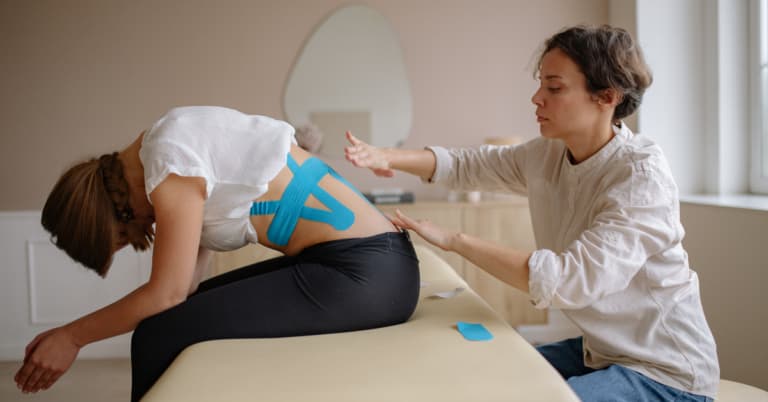
A clear guide from DC Physiotherapy in Dublin
What Is Spinal Decompression? A Non-Surgical Treatment for Disc-Related Back and Neck Pain
If back or neck pain is controlling how long you can sit, how far you can walk or whether you sleep comfortably, you may be searching for an option beyond painkillers and repeated short-term treatments. Non-surgical spinal decompression is designed to reduce pressure through affected spinal segments and can be combined with physiotherapy, laser therapy and rehabilitation to help suitable patients move forward.
Chartered physiotherapists
Expert spinal decompression clinic
300+ Google reviews
When back or neck pain starts making your world smaller
Ongoing pain can affect much more than your spine. It can change how you work, sleep, drive, exercise and spend time with your family.
You may dread getting out of the car, struggle to put on your shoes or wake repeatedly because no position feels comfortable. If pain travels into your leg or arm, walking, sitting at a desk or even holding a phone can become difficult. You start planning every day around what your back or neck might allow.
It is particularly frustrating when you have tried painkillers, injections, exercises or several forms of hands-on treatment, but the pain keeps returning. If an MRI mentions a bulging disc, herniated disc, degenerative disc disease, sciatica or spinal stenosis, it is understandable to wonder whether surgery is your only remaining option.
What is non-surgical spinal decompression?
The term “spinal decompression†can describe surgical procedures as well as non-surgical treatment. This article focuses on non-surgical spinal decompression therapy: a controlled treatment delivered on a specialist, computer-guided decompression table.
During treatment, a carefully calculated force is applied to the spine in gradual cycles. The aim is to gently unload the affected spinal segment, reduce mechanical pressure and create a more comfortable environment for irritated discs and nerves.
The force, angle and treatment position can be adjusted according to the area involved, the person’s body size, symptoms and response. This is different from somebody simply pulling on your back. Modern equipment allows the clinician to control and progressively modify treatment for the lumbar spine in the lower back or the cervical spine in the neck.
How does spinal decompression work?
Spinal discs sit between the vertebrae, absorb load and help the spine move. When a disc becomes irritated, degenerates, bulges or herniates, it can contribute to local pain or irritate a nearby nerve.
Controlled unloading
The table applies carefully controlled phases of tension and release to unload the targeted spinal area.
Reduce nerve irritation
For an appropriately selected disc or nerve problem, reducing mechanical pressure may help settle pain that travels into the leg or arm.
Create a window for rehabilitation
When symptoms reduce, patients can often move more comfortably and participate more effectively in physiotherapy and exercise.
In the lower back, disc or nerve irritation can produce sciatica. In the neck, symptoms may travel into the shoulder, arm or hand. Decompression aims to reduce the load affecting these sensitive structures; physiotherapy and rehabilitation then work on movement, strength and longer-term function.
What conditions may spinal decompression help?
Following a suitable clinical assessment, non-surgical spinal decompression may be considered for several disc-related and nerve-related conditions.
Bulging or herniated discs
A disc bulge or contained herniation may irritate surrounding structures or a nearby nerve, causing local or travelling pain.
Sciatica
Lumbar nerve-root irritation can cause burning, shooting pain, tingling or numbness through the buttock and leg.
Degenerative disc disease
Age-related disc changes can affect load tolerance and contribute to recurring back or neck pain.
Some presentations of stenosis
Carefully selected patients with narrowing around spinal nerves may benefit from a plan designed around their presentation.
Disc-related neck pain
Cervical disc problems can produce neck pain as well as symptoms travelling into the shoulder, arm or hand.
Persistent disc symptoms
Decompression may be considered when symptoms persist after a previous disc injury and no contraindication is present.
An MRI can be useful when symptoms are severe, persistent or complex, but it is not always essential before an initial assessment. Scan findings need to be matched with your symptoms and physical examination because not every change visible on an MRI is responsible for pain.
What does spinal decompression treatment feel like?
You remain fully clothed and are positioned comfortably on the decompression table. A harness or support system is fitted around the relevant area, and the clinician sets the treatment parameters based on your assessment.
Most people describe a gradual stretching or unloading sensation rather than pain. You can communicate with the clinician throughout the session, and the settings can be adjusted to keep treatment comfortable.
Responses vary. Some people notice that they feel looser after a session, while others improve more gradually across a programme. Symptoms can fluctuate early as the body adapts, so your response is monitored and the treatment is adjusted where necessary.
Why we combine decompression with physiotherapy
Pain relief matters, but the wider goal is to help you return to sitting, walking, working, sleeping and exercising with greater confidence.
Specialist assessment
We identify the likely source of the symptoms, assess movement and nerve function, and review MRI findings when available.
Targeted decompression
Treatment settings and positioning are selected for the person, the spinal level involved and the response—not applied as a generic protocol.
Physiotherapy and laser therapy
Appropriate manual treatment, movement work and laser photobiomodulation may be added to support pain reduction and recovery.
Progressive rehabilitation
Individual exercises rebuild mobility, trunk or neck strength, confidence and tolerance for work, sport and everyday life.
The purpose is not to make you dependent on a machine. Decompression can help reduce symptoms and create an opportunity to move, while rehabilitation builds the physical capacity required for longer-term progress.
Is spinal decompression supported by research?
Research into non-surgical spinal decompression has reported encouraging improvements in pain, function, movement and quality of life for appropriately selected patients, particularly when decompression is combined with physiotherapy.
A 2022 clinical trial involving patients with lumbar radiculopathy found greater improvements when non-surgical decompression was added to routine physiotherapy. A 2017 double-blind randomised trial reported clinical and radiological improvements in patients receiving physiotherapy for lumbar disc herniation and concluded that decompression could be used as an additional physiotherapy treatment.
The results seen in published research reflect improvements we regularly observe in suitable patients at DC Physiotherapy, including reductions in back or leg pain and better tolerance for sitting, walking, sleeping and exercise. Individual results vary, which is why patient selection, progress reviews and rehabilitation remain central to our approach.
Research referenced in this article:
Amjad F, et al. Effects of non-surgical decompression therapy in addition to routine physical therapy in patients with lumbar radiculopathy. BMC Musculoskeletal Disorders. 2022.
Demirel A, et al. Regression of lumbar disc herniation by physiotherapy: Does non-surgical spinal decompression therapy make a difference? Journal of Back and Musculoskeletal Rehabilitation. 2017.
Macario A, et al. Systematic literature review of spinal decompression via motorised traction for chronic discogenic low back pain. Pain Practice. 2006.
Why choose DC Physiotherapy for spinal decompression?
Non-surgical spinal decompression is a central part of our work with disc-related back pain, neck pain and sciatica—not an occasional add-on.
Specialist disc experience
Our team regularly assesses bulging and herniated discs, sciatica, degenerative disc disease and spinal stenosis.
Individual treatment settings
Force, angle and positioning are tailored to the spinal area, clinical findings, body size and response of each suitable patient.
Complete rehabilitation pathway
Decompression can be combined with chartered physiotherapy, laser therapy, manual treatment and progressive exercise.
Clear treatment plan
You will understand what we believe is causing the symptoms, what treatment we recommend and how progress will be measured.
Progress reviewed throughout
A typical programme may involve approximately 10 sessions, but treatment is reviewed and adjusted according to meaningful improvement.
300+ Google reviews
You can read the experiences of patients who attended our Dublin clinic for disc, nerve, back and neck pain.
Who needs additional assessment before treatment?
Spinal decompression is not appropriate for every spinal condition. Your clinician will screen your medical history, symptoms, imaging and potential contraindications before recommending treatment.
Additional medical clearance or a different treatment route may be required where there is an unstable or recent fracture, significant spinal instability, active spinal infection, cancer affecting the spine, pregnancy, severe neurological deterioration, certain bone-weakening conditions or particular implants. A lumbar fusion in the proposed treatment area is a contraindication at our clinic.
Frequently asked questions about spinal decompression
Is spinal decompression painful?
It should not be painful. Most patients describe a controlled stretching or unloading sensation. The treatment position and settings can be adjusted if you feel uncomfortable.
Is spinal decompression the same as traction?
The treatments are related, but specialist spinal decompression uses computer-guided cycles with adjustable force, angle and positioning. At DC Physiotherapy, it is delivered as part of an individual treatment and rehabilitation plan.
Can spinal decompression help sciatica?
It may help suitable patients when sciatica is associated with a lumbar disc or nerve-root problem. Sciatica has several possible causes, so an assessment is needed before recommending treatment.
Can spinal decompression help a bulging or herniated disc?
It may help selected patients with symptoms linked to a bulging or contained herniated disc by gently unloading the affected spinal segment. Suitability depends on your symptoms, examination and any available imaging.
Can I have spinal decompression after back surgery?
It depends on the procedure, the area treated and whether implants or a fusion are present. A lumbar fusion in the proposed treatment area is a contraindication at our clinic. Bring your operation details and recent imaging for review.
Do I need an MRI before booking?
Not always. An MRI can be helpful for complex, persistent or progressive symptoms, but your history and physical examination remain essential. If you already have imaging or a report, bring it to your appointment.
How many spinal decompression sessions will I need?
A typical programme may involve approximately 10 sessions, but the recommendation depends on the condition and your response. Progress is reviewed throughout rather than assuming the same plan is right for everyone.
Is spinal decompression covered by Irish health insurance?
Spinal decompression sessions are generally not covered by Irish health insurers. Ask your provider whether any physiotherapy component of your care may qualify under your individual policy.
Could spinal decompression be suitable for you?
If disc-related back or neck pain is stopping you from sleeping, sitting, walking, exercising or enjoying normal family life, book an initial assessment. We will review your symptoms, movement and any available scan reports, then explain whether our combined non-surgical treatment approach is appropriate for you.
DC Physiotherapy, Unit 4 Newlands Business Park, Newlands Road, Dublin 22.