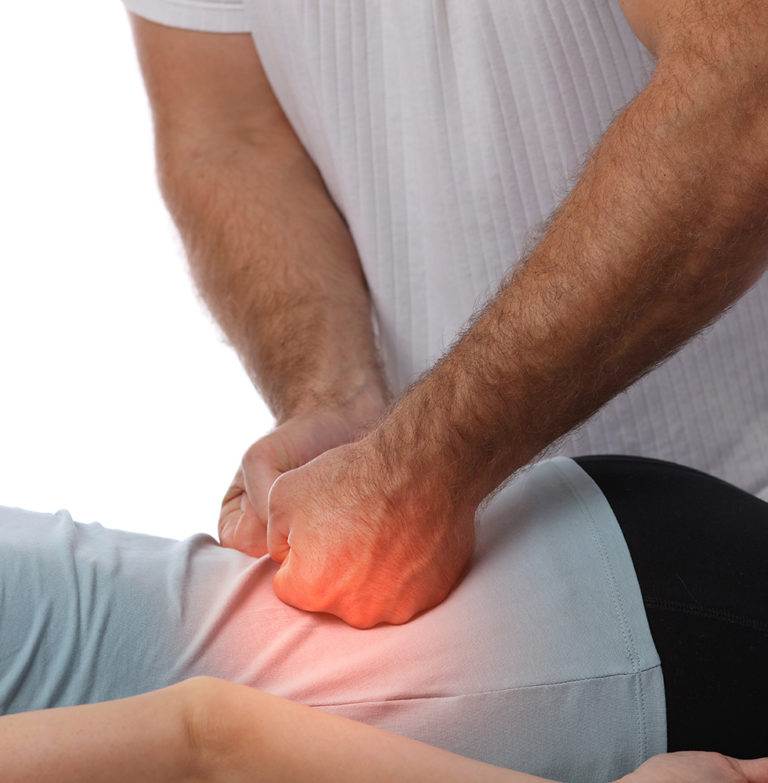
Can a disc bulge be cured permanently?
A disc bulge does not have to define your future. Find out what “cured” can mean, what may help calm back or leg pain, and how a personalised plan can support your return to everyday life.

Can a disc bulge be cured permanently?
Many people improve substantially, and some disc herniations become smaller over time. But no treatment can promise that every disc bulge will disappear permanently or that symptoms can never return. “Cured” is often best understood as getting back to the activities that matter, with pain and nerve symptoms well managed and confidence restored.
A scan is only one part of the picture. Your symptoms, movement, strength, health and goals all matter. A chartered physiotherapist can assess how the findings relate to you and discuss a non-surgical plan that may include spinal decompression therapy, laser and exercise-based physiotherapy.
Book Treatment →A disc bulge on an MRI is not the whole story.
A lumbar disc bulge describes disc tissue extending beyond its usual outline. It may appear alongside back pain, buttock pain, sciatica or pins and needles, but imaging findings need to be considered alongside your symptoms and clinical assessment.
Some people have a disc bulge on a scan without pain. For others, irritation around a nerve can contribute to pain travelling down a leg. The useful question is not only “What does my MRI say?” but also “What is limiting me now, and what can I safely work towards?”
 Your symptoms and goals matter too
Different disc problems can affect people in different ways.
Understanding the pattern can help make your next step clearer. These common terms describe related but distinct findings.
Disc bulge
A broader extension of the disc beyond its usual edge. A bulge may be linked with local back pain or may be an incidental scan finding. Treatment focuses on your symptoms, movement and everyday function.
Disc herniation or protrusion
A more focal area of disc material extends beyond the disc margin. Research reports that some symptomatic herniations reduce in size during non-surgical care. A physiotherapy plan can help you stay active and rebuild function as symptoms settle.
Sciatica or radicular pain
Irritation of a nerve in the lower back can cause pain that travels into the buttock or leg, sometimes with tingling or altered sensation. Decompression, laser and guided exercise may be considered as parts of a tailored symptom-management plan.
Degenerative disc changes
Disc dehydration or age-related changes can appear on MRI and are common. Your plan can focus on improving strength, mobility, confidence and tolerance for the activities you need to do.
Spinal stenosis
Narrowing around the spinal canal or nerve openings may contribute to leg symptoms, often influenced by posture or walking distance. Assessment helps identify which positions and exercises are appropriate for you.
Neck disc bulge
A cervical disc finding may be associated with neck, shoulder or arm symptoms. The same principle applies: connect the scan with your examination and goals before deciding what care may help.
Three parts of care, working towards one goal: moving forward.
For suitable patients, the combination of spinal decompression therapy, laser and chartered physiotherapy offers a structured conservative route: symptom support, guided movement and a progressive return to activity.
Controlled, computer-guided traction
Non-surgical spinal decompression uses a treatment table to apply a controlled pulling force to the spine. Your clinician selects settings based on your assessment and response, with the aim of reducing loading and helping you tolerate movement and rehabilitation.
- Individualised positioning and force settings
- May be considered for disc-related back or leg pain
- Progress reviewed as your symptoms and function change
Targeted light as part of symptom care
Therapeutic laser is applied over the relevant area as a non-invasive part of your plan. Research on disc-related radicular pain has reported improvements in pain and disability in some treatment settings. At the clinic, laser is used alongside assessment and active rehabilitation, not as a stand-alone promise of a scan change.
- Comfortable, non-invasive application
- May support pain management around the back or leg
- Combined with a plan that keeps you moving
Build strength, movement and confidence
Your physiotherapist helps you understand your symptoms, find movements you can manage and build capacity progressively. The programme is tailored to your presentation, daily demands and goals, with exercises adjusted as you improve.
- Movement and strength assessment
- Practical guidance for work, sleep and activity
- Progressive exercises for a confident return
Positive findings that help explain the non-surgical approach.
The aim here is simple: show how evidence relates to disc changes, nerve-related pain and function without suggesting that one treatment can guarantee a permanent cure.
Some symptomatic disc herniations reduce in size during non-surgical care.
A systematic review and meta-analysis reported regression in 63% of the non-surgically treated symptomatic lumbar disc herniation cases it included. This describes changes seen across included patients; it does not predict an individual result or prove that one specific treatment caused the change.
Read the systematic review →Traction has been studied as an addition to care for radicular pain.
In a randomised controlled study of people with radicular pain and matching disc herniation, the group receiving lumbar traction alongside medical care had a higher proportion reporting at least 25% pain improvement at one month than the medical-care group. This supports studying traction as one component of a broader plan.
Read the clinical study →Laser therapy has been evaluated for discogenic lumbar nerve pain.
A double-blind randomised trial examined low-level laser therapy for discogenic lumbar radiculopathy. Laser may be used as an adjunct to help manage symptoms while a person works through an individualised rehabilitation plan.
Read the laser trial →Movement and exercise are central parts of conservative back care.
Clinical guidance includes exercise within care for low back pain and sciatica. A physiotherapist can select and progress movements around your symptoms, helping you build towards the activities that matter in your day-to-day life.
Read NICE recommendations →Research findings describe groups and treatment settings, not a guaranteed outcome for an individual. The studies linked above examine different approaches and should not be read as a direct comparison of DC Physiotherapy’s specific programme.
Three gentle exercises to discuss with your physiotherapist.
These examples are here as a starting point for learning, not a personalised prescription. The right movement depends on your assessment and how your symptoms respond.
Comfortable lying and breathing
Lie on your back with knees bent, or use another comfortable position. Breathe slowly and let your back settle for a minute or two. This can be a calm starting position before gentle movement.
Small pelvic tilts
With knees bent, gently rock your pelvis so your lower back moves a little towards and away from the floor. Keep the movement small and easy; repeat only if it feels comfortable.
Short, supported walks
Try a brief, comfortable walk on level ground, using support if needed. Start with a manageable distance and build gradually according to your symptoms and clinician’s advice.
Get a plan for your disc symptoms, not more guesswork.
Tell us what hurts, what your scan says if you have one, and what you want to do again. Your physiotherapist will assess you, explain the options and help you decide whether decompression, laser and exercise-based physiotherapy suit your needs.
Disc bulge treatment FAQs
Can a disc bulge go back to normal?
Some disc herniations reduce in size over time, and many people improve in pain and function. A scan does not always return to a completely “normal” appearance, and imaging change is not the only measure of recovery. Your clinician can explain what matters in your case.
Can a disc bulge be cured permanently without surgery?
Many people manage disc-related symptoms without surgery and return to their usual activities. No clinician can guarantee a permanent cure or promise that a bulge will disappear, but assessment, symptom-guided activity and a progressive care plan can support recovery and reduce the impact on daily life.
Can spinal decompression help a bulging disc?
Non-surgical spinal decompression is a form of controlled traction that may be considered for selected people with disc-related back or leg symptoms. Your physiotherapist will assess your presentation, explain how the treatment fits into your plan and monitor your response.
Can laser therapy help a herniated disc or sciatica?
Laser therapy has been studied for discogenic lumbar radiculopathy and may be used as an adjunct for symptom management. It is paired with assessment and exercise-based physiotherapy so that care also addresses movement, strength and function.
What exercises are good for a disc bulge?
There is no single best exercise for every disc bulge. Depending on your symptoms, a physiotherapist may start with comfortable positions, gentle pelvic movement, walking, trunk control, or movements that help your specific leg symptoms. The exercises should be adjusted to your response.
How long does it take to recover from a disc bulge?
Recovery time varies with the type and duration of symptoms, nerve involvement, general health and daily demands. Your first assessment gives you an opportunity to discuss a realistic plan and review progress rather than relying on a fixed promise.
Do I need an MRI before booking?
No. You can book an assessment without an MRI or GP referral. If you already have scan results or a report, bring them along and your physiotherapist can consider them alongside your symptoms and examination.
When should I seek urgent medical care?
Seek urgent medical care for new loss of bladder or bowel control, numbness around the genitals or saddle area, or rapidly worsening weakness in one or both legs. If you are unsure, contact your GP or emergency service promptly.
Where is DC Physiotherapy?
We are at Unit 4, Newlands Business Park, Newlands Road, Clondalkin, Dublin 22, D22 FY22. There is free patient parking. Call 086 199 0706 if you need help booking.
Your scan is one piece of the picture. Let’s work out your next step.
If back or leg pain is limiting your work, sleep, walking or family life, book treatment to get a professional assessment and a clear plan. We’ll discuss spinal decompression, laser and chartered physiotherapy where appropriate to your presentation.
What our patients say
Trusted by patients across Clondalkin and Dublin
Read experiences shared by patients who came to DC Physiotherapy for physiotherapy, rehabilitation and non-surgical spinal decompression.
Individual experiences and treatment responses vary. An assessment is needed to determine suitable care.
Can a disc bulge be cured permanently?
However, the question remains: can a disc bulge be cured permanently? Let's delve into what a disc bulge is, who it affects, its symptoms, and explore a non-surgical solution that offers hope for long-term relief.
Who Does it Affect?
Disc bulges can affect people of all ages, although they are more common in adults between the ages of 30 and 50. Factors such as poor posture, heavy lifting, repetitive movements, and obesity can increase the risk of developing a disc bulge.
A disc bulge, also known as a herniated disc or slipped disc, can be caused by a variety of factors, including:
- Age-related degeneration: As we age, the discs in our spine lose hydration and elasticity, making them more susceptible to damage and bulging.
- Trauma or injury: Accidents, falls, or sudden impacts can cause the discs to herniate or bulge out of place.
- Poor posture: Prolonged sitting, standing, or lifting heavy objects with improper posture can put excessive strain on the spine, leading to disc bulge over time.
- Repetitive movements: Activities or occupations that involve repetitive bending, twisting, or lifting may contribute to the development of disc bulge.
- Obesity: Excess weight puts added pressure on the spine, increasing the risk of disc degeneration and bulging.
- Smoking: Smoking can impair the blood flow to the spinal discs, weakening them and making them more prone to injury and degeneration.
- Degenerative disc disease: Conditions such as osteoarthritis or degenerative disc disease can accelerate the breakdown of the discs, leading to bulging or herniation.
It's important to note that while these factors can contribute to the development of disc bulge, not everyone who experiences them will develop this condition. Additionally, lifestyle modifications, proper ergonomics, and regular exercise can help reduce the risk of disc bulge and promote spinal health.
Symptoms of Disc Bulge:
The symptoms of a disc bulge vary depending on the location and severity of the protrusion. Common signs include:
Persistent back pain, particularly in the lower back
Radiating pain that travels down the buttocks and legs (sciatica)
Numbness or weakness in the legs or feet
Difficulty standing, walking, or sitting for extended periods
Tingling sensations or "pins and needles" in the affected area
Non-Surgical Solution: Spinal Decompression at DC Physiotherapy, Dublin
While some cases of disc bulge may require surgical intervention, many individuals find relief through non-invasive treatments like spinal decompression therapy. At DC Physiotherapy in Dublin, a specialized approach to spinal decompression offers a promising solution for those suffering from disc bulge.
Spinal decompression therapy is a gentle, non-surgical technique designed to alleviate pressure on the spinal discs and promote healing. During a session, the patient lies comfortably on a decompression table while a specialized device applies controlled traction to the spine.
This traction creates negative pressure within the discs, allowing herniated or bulging material to retract, relieving pressure on nerves and facilitating the flow of oxygen, water, and nutrients to the affected area.
The benefits of spinal decompression therapy include:
- Reduction of pain and inflammation
- Improved spinal alignment and mobility
- Enhanced circulation and healing
- Non-invasive, drug-free treatment option
- Potential long-term relief from disc bulge symptoms
Can a disc bulge be cured permanently? While a disc bulge can cause significant discomfort and limitations, it's essential to know that relief is possible.
Through non-surgical approaches like spinal decompression therapy at DC Physiotherapy in Dublin, individuals suffering from disc bulge can find lasting relief and regain their quality of life.