Sports Injury Rehabilitation in Clondalkin: Getting Back to Full Fitness
A sports injury is more than just a physical setback. For anyone who trains regularly, competes in a sport, or simply values an active lifestyle, the enforced pause that comes with an injury affects far more than just the body. The right rehabilitation programme changes the experience entirely: instead of waiting passively for something to heal, you are actively rebuilding, progressing week by week, and returning to sport in a stronger and more resilient state than before. That is what sports injury rehabilitation at DC Physiotherapy in Clondalkin is designed to deliver.

What Is Sports Injury Rehabilitation?
Sports injury rehabilitation is the structured process of restoring function after an injury sustained during physical activity. It goes beyond simple pain management to address the full chain of recovery: tissue healing, strength restoration, movement quality, neuromuscular control, and sport-specific fitness. The goal is not just to return to activity but to return with the physical qualities needed to perform at the same level as before and to reduce the risk of the same injury recurring.
The rehabilitation process is guided by evidence-based clinical principles and adapted to the specific demands of the sport or activity involved. A marathon runner’s rehabilitation programme looks very different from a GAA player’s, even if both sustained an ankle sprain, because the movement demands, loading patterns, and return-to-sport criteria differ significantly between the two. At DC Physiotherapy, programmes are designed around the individual, not just the diagnosis.
Common Sports Injuries Treated at DC Physiotherapy
The range of sports injuries seen in a busy physiotherapy clinic in Dublin reflects the diversity of sport and exercise in the local community. Ankle sprains are among the most common presentations, ranging from mild lateral ligament injuries to more complex high ankle sprains that require longer rehabilitation. Hamstring strains are a frequent complaint in field sports and sprinting, particularly when they occur at high speed or in the proximal region near the sit bone.
Sports injury treatment also regularly covers shoulder injuries in swimmers, throwers, and contact sport athletes, including rotator cuff strains, AC joint sprains, and shoulder instability. Knee injuries including anterior cruciate ligament (ACL) tears, meniscal injuries, and patellofemoral pain are common across a range of sports and often require extended rehabilitation programmes. Groin pain and hip flexor strains are increasingly recognised in GAA, soccer, and running populations. Whatever the injury, a clear and honest assessment is the starting point for everything.
The Phases of Sports Injury Recovery
Effective sports rehabilitation follows a logical progression through distinct phases, each building on the last. Rushing through phases or skipping ahead before the criteria for progression have been met is one of the most common reasons for setbacks and reinjury. Understanding the structure of recovery helps athletes approach rehabilitation with the patience and purpose it requires.
The initial phase focuses on protecting the injured tissue, managing pain and swelling, and maintaining as much function as possible in the unaffected areas of the body. This phase does not mean total rest; it means intelligent loading within the tolerance of the healing tissue. The second phase begins as pain and inflammation settle, with the focus shifting to restoring full range of motion and beginning strength work. The third phase advances strength training and introduces movement patterns more specific to the demands of the sport. The final phase is sport-specific preparation, where the athlete trains in conditions that replicate competition demands as closely as possible before returning to play.
Initial Assessment: Understanding Your Injury
The first appointment at DC Physiotherapy begins with a thorough assessment of the injury and the factors that contributed to it. Your physiotherapist will take a detailed history covering the mechanism of injury, the location and behaviour of your symptoms, your training history and load in the weeks before the injury, and any relevant previous injuries. Understanding the mechanism matters because it often reveals whether the injury was traumatic or the result of cumulative overload, which has significant implications for both treatment and prevention.
The physical examination assesses range of motion, strength, joint stability, tissue sensitivity, and movement patterns that may have contributed to the injury. In some cases, imaging such as an MRI or ultrasound may be recommended to assess the extent of tissue damage before a realistic return-to-sport timeline can be given. At the end of the assessment, you will have a clear diagnosis, an understanding of what happened and why, and a structured plan for recovery.
Manual Therapy and Soft Tissue Work in Sports Rehab
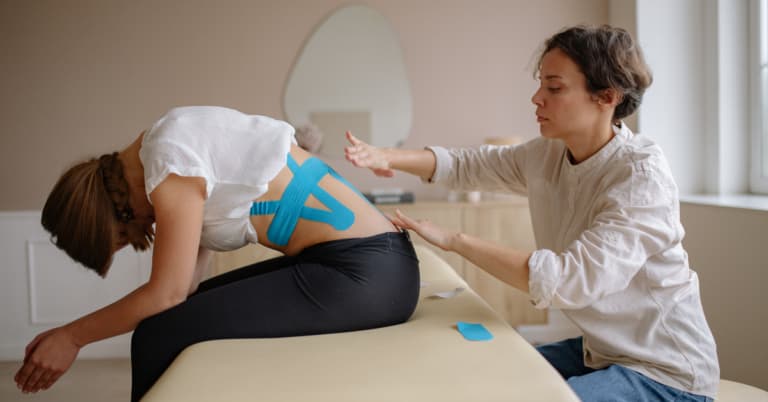
Manual therapy and soft tissue techniques play an important role in the early and middle phases of sports injury rehabilitation. Techniques such as joint mobilisation, myofascial release, trigger point therapy, and instrument-assisted soft tissue mobilisation help reduce pain, restore normal tissue extensibility, and improve the joint mechanics that allow progressive loading to proceed without aggravation.
At DC Physiotherapy in Clondalkin, manual therapy is used as a tool to facilitate rehabilitation rather than as a standalone treatment. The goal is always to use hands-on work to create the conditions in which exercise can be progressed more effectively. Patients who receive manual therapy in conjunction with a targeted exercise programme consistently achieve better outcomes than those receiving either in isolation, which is why both are integrated into every rehabilitation plan where appropriate.
Progressive Exercise Rehabilitation
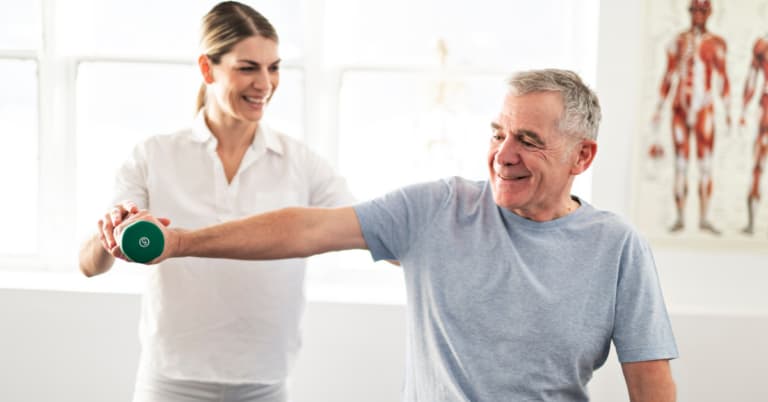
Exercise is the engine of sports injury recovery. At DC Physiotherapy, exercise programmes are built on the principle of progressive overload: starting within the tolerance of the healing tissue and systematically increasing demand as capacity improves. This progression is not guesswork; it follows the biological timeline of tissue healing and the objective measures of strength and function that indicate readiness for each step.
Early rehabilitation focuses on foundational strength in the muscles directly supporting the injured structure. As strength improves, exercises become more dynamic and movement-focused, introducing single-leg work, multi-directional loading, and eventually speed and reactive elements. Each session includes clear criteria for progression and regression, so the programme adapts to how you respond rather than following a rigid predetermined path.
Return to Sport: Objective Criteria, Not Just Time
One of the most important shifts in modern sports rehabilitation thinking is the move away from time-based return to sport toward criterion-based return. A hamstring strain is not ready to return to full sprinting simply because six weeks have passed; it is ready when the athlete demonstrates sufficient strength, symmetry, and movement quality to meet the demands of the sport safely.
At DC Physiotherapy, return to sport decisions are guided by objective tests appropriate to the injury and the sport. For lower limb injuries, these typically include limb symmetry indices for strength and single-leg hop performance, as well as sport-specific movement assessments. For shoulder injuries, force production and movement quality under load are evaluated before overhead or throwing activities are cleared. This approach gives athletes and coaches confidence that the return decision is based on real readiness rather than assumed readiness.
Injury Prevention as Part of Rehabilitation
The rehabilitation process is an opportunity to address not just the specific injury but the underlying physical factors that contributed to it. Muscle imbalances, movement asymmetries, inadequate hip strength, and poor single-leg stability are all common findings in athletes with overuse injuries and some acute injuries, and correcting them reduces the risk of the same problem recurring.
At DC Physiotherapy, the end of formal rehabilitation includes a clear picture of what needs to be maintained beyond discharge. This might be a specific set of maintenance exercises, a modified training load approach for the next training block, or guidance on the early warning signs that would warrant re-assessment. Completing a rehabilitation programme and then abandoning all the work done during it is a reliable way to encounter the same injury again.
Booking Your Sports Injury Assessment in Clondalkin
Whether you have just sustained an acute injury or have been carrying something for weeks without it resolving, an early assessment gives you the clearest picture of what is happening and the fastest route back to full activity. At DC Physiotherapy in Clondalkin, our physiotherapists work with athletes at all levels and in all sports, from weekend recreational runners to competitive GAA players, and we build rehabilitation programmes that reflect the demands of what you are returning to.
Book your sports injury assessment online and start moving in the right direction from your very first appointment.